Category Archives: CO2

Is Global Temperature Driving The Rise In Atmospheric CO2?


The question asked in the last posting was “ If CO2 Emissions Are Not Rising, Why Is Atmospheric CO2 Rising At “Unprecedented” Rates?” The latest news is that the human emissions are flat lining but curiously the record shows that for the last four years, the atmospheric CO2 measured at Mauna Loa, has risen faster than ever.

The warmers tell us that there can be no ambiguity about why the atmospheric CO2 is climbing. It is because the “natural” carbon in the carbon cycle is perfectly balanced and addition of unnatural carbon, in the form of CO2 from the burning of fossil fuels is the cause.

For several years, several skeptics have ventured that the rise in atmospheric CO2 is due to the gradual rise of global temperatures. This thinking coincides with the results of the Antarctic Ice Core data that indicates for hundreds of thousand of years when temperature rises or falls CO2 responds to the change in temperature by rising or falling to match the temperature.

Dr. Murry Salby has been lecturing on his findings that show atmospheric CO2 coincides with changes in global temperature and shows no coincidence with increases in CO2 emissions from fossil fuels. In a nutshell, Salby’s theory says, the rate of change of CO2 in the atmosphere can be described by an equation that demonstrates that it only depends on temperature change.

Continue reading

If CO2 Emissions Are Not Rising, Why Is Atmospheric CO2 Rising At “Unprecedented” Rates?


The International Energy Agency (IEA) has announced that global carbon dioxide (CO2) emissions have not increased for two years running. They say the global economy has grown during this period and that it shows that economic growth and CO2 emissions have been decoupled. Further they are attributing this condition as likely due to renewable energy growth, and China having curbed its use of coal to improve the environment. They note that China has promised to stop increasing emission in 2030 but the IEA thinks we may be seeing the stoppage now.   Fat Chance.

You might think then that atmospheric CO2 must have flat-lined too. If you think that you are wrong.   Climatecentral.org posted “Unprecedented Spike in CO2 levels in 2015” and from that posting we get this:

” The annual growth rate of carbon dioxide in the atmosphere rose more in 2015 than scientists have ever seen in a single year, the National Oceanic and Atmospheric Administration announced Thursday.

It was the fourth year in a row that carbon dioxide concentrations grew by more than 2 parts per million, with an annual growth rate of 3.05 parts per million in 2015. ­The spike comes in the same year that Earth reached an ominous global warming milestone — scientists last year measured the highest atmospheric concentrations of carbon dioxide ever recorded.”

But wait, but wait. If the emissions are not increasing how can the atmospheric CO2 be increasing at an “unprecedented rate” or even growing at all.

Continue reading

One Papers Confirms “Pause”, Another Says It Didn’t Happen


The WUWT site, Anthony Watts posted“The ‘Karlization’ of global temperature continues – this time RSS makes a massive upwards adjustment”

It seems since my last posting,  the RSS satellite temperature record will be revised.   It appears that it will be cited as proving there was no “pause”. Dr Mears, the chief scientist of RSS said that he has been bombarded with emails wondering why the RSS is supporting the DENIER’S view. Mears believes that the denialists (his words) like to cherry pick the starting point.   Watts commented on this by saying:

” It seems to me based on his recent comments that Dr. Mears has gotten fed up with people using his RSS data set to suggest that the world isn’t warming as he expects it should”.

greengorillas3hurondrmeetings

Continue reading

Observed GlobalTemperatures Well Below IPCC 1990 Forecast


The “pause” in the global temperature rise is at 18+ years. This is disconcerting the warmer scientists because atmospheric carbon dioxide (CO2) content has been increasing during this period. The warmers have resorted to very poorly disguised attempts to alter the temperature record. Despite their temperature record alterations, the global temperature is well below that forecast by the IPCC in their 1990 report. How much altering of the record must the warmers do to get back in step with the IPCC forecasts? Lord Monckton of Brenchley has posted on the WUWT website “The abject failure of official global-warming predictions”. In his posting he compares land-based temperature organizations and satellite based temperature organizations versus the prediction by the IPCC.

Two charts follow: The first is the UAH plot of global temperatures for an 18 years and 6 months long pause. UAH is a satellite-based record. The second is the RSS satellite based temperatures which differs slightly from the UAH data. The RSS data yields a pause of 18 years and 8 months duration.

UAHtemppuaseclip_image002_thumb2

UAH Global Temperature Chart Showing Duration of the Pause. The left hand scale shows temperature anomalies (plus and minus) in degrees C. The right hand scale shows atmospheric CO2 concentration in PPM. The heavy blue line is the global temperature trend line for the period In small(er) print in the middle of the chart is the trend line slope. For this chart, the trend is a -0.01C temperature change per century.

Continue reading

Is There A Pause In Global Temperatures?


The “pause”, meaning the lack of global temperature rise in the 21st century, has gotten a lot of attention. The warmers want to deny that it is significant. The skeptics say that it is very significant in that atmospheric carbon dioxide (CO2) has been increasing during this period of time. According to the wamer’s theory, global temperatures should have been rising. Last year, some of the keepers of the global temperature records decided they had, had enough of this focus on the “pause”. So they made some bogus changes to the way the temperature was measured and when they were finished, they said—– see there really was no pause. Click here to see how they have tried to pull this off.

There are several global temperature amassing groups. These groups broadly are divided by being ground based or satellite based. The former are dependant on temperatures measured mostly from ground-based stations supplemented by some ocean surface temperature measurements. The ground-based stations are primarily in populated areas. Northern Hemisphere stations predominate. The vast areas of the oceans (75 % of the globe’s surface) are minimally covered. There are also enormous areas of land where population is very limited, or no one at all. In those areas, computers predict the missing temperatures.

The ground station leaders are: (1) (GISS), NASA Goddard Institute for Space Studies (2) (HadCRUT4) the Hadley Centre of the UK Met Office and the land surface air temperature records compiled by the Climatic Research Unit (CRU) of the University of East Anglia. (3) NCEI) NOAA’s National Centers for Environmental Information.

(For those of you with longer memories, yes, the University of East Anglia was the headquarters of the Climategate gang)

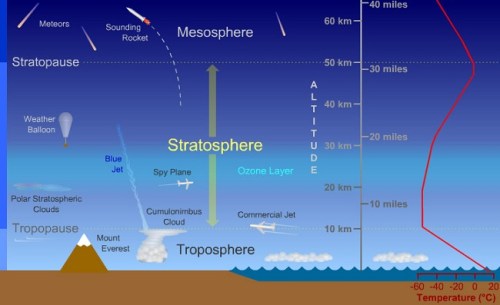
The latter group consists of two satellite based global temperature-measuring organizations. Satellites measure radiance in various wavelengths in troposphere. The troposphere extends about 7 miles above the Earth’s surface and the troposphere is where all of our weather occurs. The radiance measurements are translated into temperatures. In 1979, the University of Alabama at Huntsville (UAH) was the first satellite system to begin reading these temperatures. Start up problems are typical with any new breakthrough technology. For example early on there were problems with orbital decay and also with drift.   The UAH promptly made allowances for those problems as they have  with some smaller ones as time has past. The weather balloons (radiosondies) that have been used for many years, show agreement with the UAH satellite measurements. This is confirming proof of the satellite systems high accuracy and because it actually measures temperature across nearly the entire globe, that makes it the gold standard. The other satellite system is the Remote Sensing System (RSS). UAH and RSS have a few differences in how they make their tropospheric measurements, still the resulting temperatures are in close agreement. The satellites measurements cover about 95% of the Earth’s surface eliminating the use of computers to simulate actual measurements, as is the case with the ground based systems.

The illustration below shows the Earth’s atmosphere with the troposphere being the lowest part.
earth_stratosphere_diagram

The final player in this drama is the Intergovernmental Panel on Climate Change (IPCC). The IPCC is a branch of the UN. It was created to show how man was causing global warming and what the consequences of that would be. No, the IPCC was not created to examine the science of global warming; the founders had already decided man was the cause. The IPCC is programmed to report on the status of their work about every 5 years or so. The IPCC is often said to be the warmer’s equivalent of the “spoken word.” Most of the mainstream media accepts without question any pronouncement that is said to be from the IPCC—in their mind, it is the ultimate authority. Many major newspapers and science journals (and other media, too) do not allow, in their media, skeptical views, research, questions, letters to the editor, etc.

The IPCC produce temperature forecasts. These forecasts are the basis for catastrophic things that will happen—-flood, drought, snow, sea level, vast migrations of people, etc. —–if we do not quit using fossil fuels.

In the next posting, we will compare the IPCC temperature forecasts to the ground and satellite measured temperatures.

cbdakota


Ice Cores and Global Climate Part 3–CO2 Follows Temperature


The previous posting showed that the temperatures in the past have exceeded the current temperature rise giving lie to the assertion that the year 2015 was the hottest year ever.

A cursory examination indicates that the warmers do not dispute the temperature records derived from the ice cores. But looking at the relationship of carbon dioxide (CO2) and temperature rise and fall as indicated by the ice core record, some warmers do not agree with the idea that CO2 follows temperature rise and fall rather than leads. First a look at graphical representations of the ice core data:

vostokwithco26a010536b58035970c0120a62f922e970c

To understand this chart, remember, time flow to the right from the past to the present. When examining the blue, temperature, and the red, CO2, the line to the right is later. For example, look at the blue and the red line beginning about 140,000 years ago. The red line is very close to the blue line but it is to the right of the blue line meaning that it is lagging the rise in temperature shown by the blue line.  The difference is more apparent if you click on the chart to enlarge it.   Note that the thickness of a line on this chart may be the equivalent of 1,000years. The creators of this chart meant to show the CO2 lagging the temperature because that is what their data told them.

Continue reading

Ice Cores and Global Climate Part 2. Are Current Temperatures Highest Ever?


As discussed in the previous posting, examination of ice cores can provide high quality data about the Earth’s climate from thousands of years in the past.    Antarctica’s ice cores cannot be surpassed for the longest age records. Let us look once again at the Vostok ice core drilling. (Click on all the charts to enlarge.)

Vostok-400Kd

This illustration reverses the direction of time flow from that of the previous posting’s chart. It does expand the data from about 120,000 years ago to the present.

The chart blue line is the ice core temperature data referenced to the global temperature. The flat red line is the average of global annual temperature means for the period 1998 to 2008. This provides a reference with which to compare the past temperatures. And lastly, the green is the annual mean temperature for 2008.   Several things are obvious. First, recent temperatures are not as warm as previous temperatures at their peak. Second, the globe began to exit the last glacial period about 15,000 years ago, and the temperature increased fairly rapidly (of course rapidly on this chart may be several thousand of years). It is not possible to attribute this rise nor really any other rise shown on this chart to something that man has done.   The current period has been relatively stable.

Continue reading

Ice Cores And What They Tell Us About Global Climate


Ice cores provide information about the climate in the past and this allows us to compare it with the current climate to determine how it stacks up. While some of the readers may know a lot about ice cores, this posting provides general knowledge for those of you that are not so familiar with ice cores. The next posting will discuss the results of the information gather at two sites in the Antarctic.

The Vostok location, one of many places where ice cores are drilled, is part of the Antarctic ice cap. At this location the snow falls each year and the temperature doesn’t rise above freezing. In fact this location is called the coldest place on Earth.

This is how the ice sheets are formed. The surface layer of snow contains gaps between the snowflakes containing air. As subsequent season’s experience snow falls, the older snow begins to compress. The compression forms a grainy material (firn) said to resemble the texture of granulated sugar. As the snow above continues to accumulate, the firn eventually densifies and closes off the pores and the air is firmly trapped. The ice sheet now has inclusions which can be analyzed. When the ice is cored out of this ice sheet, large amounts of information can be obtained for analysis. Wiki has this to say about the ice core samples:

“Ice cores contain an abundance of information about climate. Inclusions in the snow of each year remain in the ice, such as wind-blown dust, ash, pollen, bubbles of atmospheric gas and radioactive substances. The variety of climatic proxies is greater than in any other natural recorder of climate, such as tree rings or sediment layers. These include (proxies for) temperature, ocean volume, precipitation, chemistry and gas composition of the lower atmosphere, volcanic eruptions, solar variability, sea-surface productivity, desert extent and forest fires.

Continue reading

4 Major Warmers Change Their Mind And Now Back Building Nukes


Back when there was temporary shortage of natural gas, that fossil fuel was the favorite of warmers. When it became abundant, they were against it.   They just pretend to be even handed. Well what about nuclear energy? It doesn’t produce carbon dioxide (CO2) but they do not like it. My guess is that many of them are just following through on their objective of destroying capitalism.

However, a group of influential warmers now say they were wrong to oppose nuclear energy.

At the Paris COP21 in December 2015, a press conference was held where 4 noted warmers announced that they were going to back development of nuclear energy.

Continue reading

Plate Climatology Theory


ClimateChangeDispatch posted “Global Warming and Plate Climatology Theory” on 7 October 2014.   The posting was written by James Edward Kamis, a Geologist who says he believes there is a probable connection between Geology and Climate. He begins this discussion of his theory by saying:

“The Sun, quite obviously, is the first order driver of Earth’s climate, but a much neglected second order driver can contribute significantly to short-term variations. The theory proposed herein is that periods of active Earth tectonism can be correlated to periods of active climate change and climate related events.

Increased global tectonic activity equates to more faulting and crustal plate movement, which leads to more global heat release from faults, fractures and volcanoes that are more active.

Altered heat input equates to climate change.

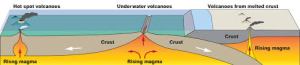
seafloorvolcano

Continue reading