Category Archives: IPCC

“ Average Global Temperature”? Do You Know What It Represents?


The warmers are saying that we cannot let the global temperature increase by more than 2ºC. According to them, really bad things will happen if we exceed that number. The 2ºC must be another of those “tipping points” that we have heard so much of in recent years. Most all of which have come and gone with out any noticeable effect.

What is the global temperature? You almost never hear it expressed like a typical temperature reading you get each day from the weather stations.   The only place I can find a description stated as a typical temperature reading is from the World Meteorological Organization saying that the average global temperature, between 1961 and 1990, was 14ºC (57.2ºF). But I find nothing more recent. One reason is that an agreement around a specific temperature is difficult to come by.

At the South Pole, the highest temperature ever recorded was 12.3º C (9.9ºF).  Singapore’s record low was 19.4ºC (66.9ºF). So where is the average?   An average global temperature does not exist in the real world.  I will discuss near the end of this posting.

Anomalies are used instead.  A long-term average is used for reference and the tempanomaliestemperature differences from that are termed anomalies.   Positive anomalies and negative anomalies are increases or decreases, respectively, from this long-term reference. Further these changes are very small. If you made a chart plotting a series of numbers of slowly warming normal temperature readings say:14.0ºC, 14. 01ºC, 14.01ºC, 14.02ºC, 14.02ºC, 14.03ºC,  you probably would not be able to visibly detect any change.   How frightening would that be?  Everything looks more dramatic when you plot the anomalies (0.01, 0.02, 0.o2, etc.).

Continue reading

“How Reliable Are The Climate Models” (Reblogged from WUWT)


I am reblogging a posting from WUWT by Mike Jonas titled: How reliable are the climate models?” The first chart in the WUWT posting illustrated the climate model unreliability.  The fact that climate models are not reliable has been covered on my blog, Climate Change Sanity, and many others. Often we talk about the fact that water vapor is the major “greenhouse” gas and not carbon dioxide (C02). Yet this issue is not the only reason these models have gone astray.   The WUWT blog discusses a number of other physical properties that have an effect on the “coupled nonlinear chaotic system” that is our atmosphere, that the models do not attempt to model.

The models are the basis for all the things that are forecast to happen —sea level rise, weather chaos, etc –  with their forecasts of very high global temperatures cause by CO2. Do we have a problem? Maybe but the climate models are unable to tell us anything.

cbdakota

WATTS UP WITH THAT

How reliable are the climate models?
Guest Blogger / 3 days ago September 17, 2015
Guest essay by Mike Jonas

michaels-102-ipcc-models-vs-reality

There are dozens of climate models. They have been run many times. The great majority of model runs, from the high-profile UK Met Office’s Barbecue Summer to Roy Spencer’s Epic Fail analysis of the tropical troposphere, have produced global temperature forecasts that later turned out to be too high. Why?

The answer is, mathematically speaking, very simple.

The fourth IPCC report [para 9.1.3] says : “Results from forward calculations are used for formal detection and attribution analyses. In such studies, a climate model is used to calculate response patterns (‘fingerprints’) for individual forcings or sets of forcings, which are then combined linearly to provide the best fit to the observations.”

To a mathematician that is a massive warning bell. You simply cannot do that. [To be more precise, because obviously they did actually do it, you cannot do that and retain any credibility]. Let me explain :


CLICK HERE TO READ THE REST OF THIS WUWT POSTING

What If America Can’t Stop Climate Change?


Dr Judith Curry is a top-notch researcher who is considered a lukewarmer by 140px-Curry_2006_200dpiAnthony Watts, owner of the WattsUpWithThat blog. Meaning she is not a hard-core believer in either the church of global warming or having a level of deep skepticism.   She was once believed that man was the cause of the global warming but more research convinced her that there are too many uncertainties in forecasting future climate. Whether she is a lukewarmer or a skeptic is an open question.  Her blog, Climate Etc. is reported to get about 12,000 hits per day, demonstrating that she is very influential.

Curry recently posted “Carly Fiorina hits the ‘sweet spot’ on Climate, Etc”. From that posting she says:


“In the political battles over climate change, there are three distinct and relevant questions:

  • First, does mankind have a material effect on the Earth’s climate?
  • Second, if mankind does impact the climate, is that impact harmful?
  • And third, if we assume that mankind is harming the environment, will any given American policy or collection of policies have a meaningful beneficial impact?

  Continue reading

Global Temperature Pause Now At 18 Years, 7 Months.


A special posting at Climate Depot by Christopher Monckton titled “The Pause draws blood–A new record Pause length: no warming for 18 years 7 months”  theunisonoursideshows that the “pause” in global temperatures continues.

Monckton opens up with:

” For 223 months, since January 1997, there has been no global warming at all (Fig. 1). This month’s RSS temperature shows the Pause setting a new record at 18 years 7 months.

It is becoming ever more likely that the temperature increase that usually accompanies an el Niño will begin to shorten the Pause somewhat, just in time for the Paris climate summit, though a subsequent La Niña would be likely to bring about a resumption and perhaps even a lengthening of the Pause.”

Continue reading

Tom Steyer Will Give Money To Any Politicians Promising To Push For A 50% Clean-Energy Economy by 2030.


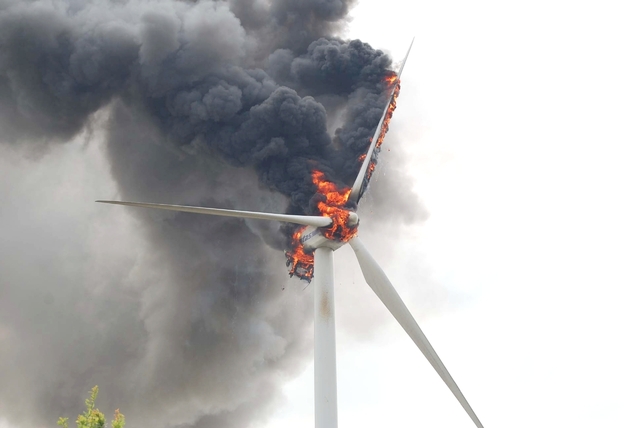
Tom Steyer, the billionaire climate-change activist, wants to push the U.S, into a windmillfireimage4250/50 split of “clean energy with fossil fuel energy by 2030 and 100% by 2050. To accomplish his objective he promises to give money to any politician that promises to act on Steyer’s behalf.

This is not his first dip into the pool of buying politicians. He spent $73 million trying to get Democrat candidates elected in last year’s mid-term election.   His investment was almost a total loss. He was the biggest funder that year. The following data comes from a table used in the Sunlight Foundation’s posting “The Political One Percent of the One Percent: Megadonors fuel rising cost of elections in 2014”. Copying a saying that Glen Beck used to use, WARNING, warmers should wrap their heads with duct tape before they look at the list.

Rank Name Election Expenditures
1 Steyer, Tom $73,884.467
2 Bloomberg, Michael $28,474,729
3 Singer, Paul $11.193,474
4 Mercer, Robert $9,501,999
5 Eychaner, Fred $8,679,400
6 Simons, James $7,439,300
7 Ricketts, John Joe $6,168,273
8 Adelson, Sheldon $5,815,118
9 Koch, Charles $5,176,400


Charles Koch (I probably need to say THE EVIL CHARLES KOCH or they will not recognize the name) came in 9th, way below Steyer who dominated everyone with $73million. He was not even followed closely by No. 2, Michael Bloomberg, also a contributor to Democrats.

The concept of clean energy reaching half share or complete dominance is delusional in that time frame.

In the realm of vastly wealthy men, Bill Gates tops them all. From a June 25, 2015, posting by the Washington Times “Multibillionaire Bill Gates rejects calls to divest from fossil fuels” here is what Gates has to say about this:

“I don’t see a direct path between divesting and solving climate change,” Mr. Gates said, as reported in the Financial Times. “I think it’s wonderful that students care and now the Pope cares. But that energy of caring, I think you need to direct it towards something that solves the problem.”

But Mr. Gates told the Financial Times that the focus should be on increasing research and development in renewables, saying that the current technology could only reduce carbon dioxide emissions at a “beyond astronomical” cost.

“There’s no battery technology that’s even close to allowing us to take all of our energy from renewables and be able to use battery storage in order to deal not only with the 24-hour cycle but also with long periods of time where it’s cloudy and you don’t have sun or you don’t have wind,” Mr. Gates said.

“Power is about reliability. We need to get something that works reliably,” he said.

Gates is a man who has made his fortune dealing with electronics and science.

Steyer’s backgound is as a coal hedge funds manager. Is he is trying to atone for his “sin” of making billions from coal?

cbdakota


Can We Trust The EPA? Part I— Mercury


Enforcement of an EPA regulation that would shut down many, if not all, of the US coal based power plants has been stopped by the Supreme Court.

The Science and Environmental  Policy Project  reports:

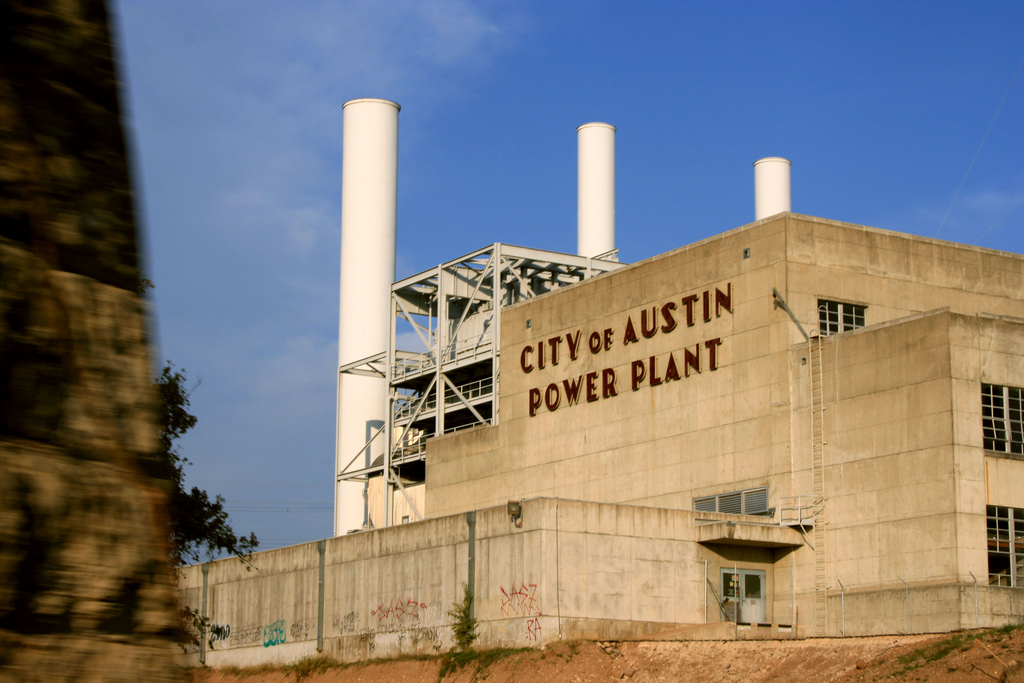
“By a 5 to 4 vote, the US Supreme Court overturned a decision by a lower Austin power-plantcourt enforcing the Environmental Protection Agency’s (EPA’s) rules on Mercury and Air Toxics Standards (MATS) released from power plants. . Writing for the majority, Justice Antonin Scalia said that it was not appropriate for the EPA “to impose billions of dollars in economic costs in return for a few dollars in health or environmental benefits.” The EPA argued that it factored in cost later in the process of crafting the rules, even though the EPA has failed to calculate costs of some of its earlier regulations. In fact, the EPA has long publically asserted that it is not required to include the costs of regulations under the Clean Air Act.”

There it is. The EPA says it isn’t required to factor in the cost of regulations. That is convenient in that they believe that they can do any thing they think is appropriate.

Lets look at the EPA reasoning behind the MATS regulations and see if the regulations are really needed.    Lets look first at mercury (Hg) emissions  which they say are bad for the children. How do they know that? Some actual data on Hg from “Bogus Mercury Scare Used To Shutdown Coal Electricity Generating Plants“:

Mercury Emissions – Natural and Man-Made

Source Emission Quantity, Mg/Year % of Total
Natural 5207 69
Manmade 2320 31
            TOTAL 7527 100
North American Coal Plants 65 0.9

 Data From Global mercury emissions to the atmosphere from anthropogenic and natural sources” Atmos. Chem. Phys., 10, 5951–5964, 2010 by N. Pirrone, S. Cinnirella, X. Feng, et al.

The  total mercury emissions from the North American coal-based plants are less than one per cent of global emissions!!  So the effect on the health of people in the US through reduction of some fraction of the coal-based plants mercury emissions is essentially too small to measure.  Even if they had data showing that Hg was causing a problem, shutting down US coal-based plants to reduce Hg would likely not have any measurable effect at all.

Tests of communities where fish is the main staple in the diet have not shown any measurable IQ problems in the children—(see Bogus Mercury Scare Used To Shutdown Coal Electricity Generating Plants above).  Pat Michaels gave a talk at the 10th International Conference on Climate Change where he reported the EPA,  developed their cost model using a hypothetical group of 240,000 women that would give birth to a child. From this they claimed to have calculated the harm caused by Hg to our nation’s children. Because some fish do accumulate Hg, this pretend group of women would pretend to each eat 300 pounds of fish per year. Almost a pound per day on average.

The EPA decided that each child had a resulting loss  of 0.00209 IQ points. And they calculated that loss of IQ would yield a $1425/per year loss in income per child. The grand total loss annually for the nation would be $3,350,000. If you are not rolling on the floor laughing your behind off, I am very surprised. Only hypothetical people in the US eat 300 lbs of fish per year. IQ scores have a +/- 10 points 95 % confidence level. And the EPA has audacity to think that a 0.00209 IQ loss can actually be measured and used to provide meaningful data?

So much for the Hg scare.

Next we will look at the secrete science behind the EPA’s claim that certain air toxics are potential killers. But that will take up some more words so it will be saved for part two.

cbdakota

Solar Cycle 24: June 2015 Update


How Cycle 24 June Sunspot plot will look when the new Sunspot numbering system is used is not yet clear. Using the “old Wolf system” that is the sun-womanInternational Smoothed Sunspot number basis, it would be expressed as 57.2 thirty day average versus last months number of 58.8.   The number for June 2015 is estimated to be 46.9 when the smoothing process is employed. What ever the measuring system, Cycle 24 is still heading downward to a minimum.

Continue reading

Recent Research Papers Show That IPCC Climate Sensitivity Is Too High


The Intergovernmental Panel on Climate Change (IPCC) publishes, every 3 to 4 years, their version of the science supporting their theory of global warming. Laboratory tests would indicate that for every doubling of CO2 in the atmosphere, the Earth’s temperature should rise about 1C. That is not really very threatening. Their theory says that a doubling will bring about a 3C temperature increase.   The theory postulates that the temperature rise caused by CO2 would increase the amount of water vapor (H2O) in the atmosphere. This increase in water vapor, the major so called greenhouse gas, would result in an additional 2C rise— thus when added to the 1C from the CO2 effect would give the 3C rise for a doubling of atmospheric CO2. This is their view of climate sensitivity. The warmer’s climate models are programmed with this sensitivity. And if you follow this topic at all, you know that the models have predicted much higher temperatures than the real, measured temperatures. And the gap between actual temperature measurements and the climate model forecasts keeps growing.

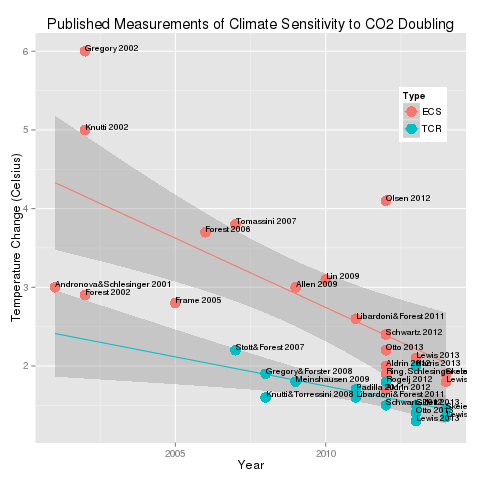
A 20 June 15 posting on Niche Modeling titled “Published measurements of climate sensitivity declining has a chart that compares the current research versus older research into  climate sensitivity. From that posting:

” Scientists made numerous estimates of climate sensitivity over the last few decades and have yet to determine the correct value.  The figure shows the change in published climate sensitivity measurements over the past 15 years (from here).  The ECS and TCR estimates have both declined in the last 15 years, with the ECS declining from 6C to less than 2C.  While one cannot extrapolate from past results, it is likely that the true figure is below 2C, and may continue to decline.  Based on this historic pattern we should reject the studies that falsely exaggerated the climate sensitivity in the past and remember that global warming is not the most serious issue facing the world today.

#2climatesensitivities

Frow Wiki, an expanded definition of ECS andTCR:

The equilibrium climate sensitivity (ECS) refers to the equilibrium change in global mean near-surface air temperature that would result from a sustained doubling of the atmospheric carbon dioxide concentration.  The transient climate response (TCR) is defined as the average temperature response over a twenty-year period centered at CO2 doubling in a transient simulation with CO2 increasing at 1% per year. The transient response is lower than the equilibrium sensitivity, due to the “inertia” of ocean heat uptake.

Over the 50–100 year timescale, the climate response to forcing is likely to follow the TCR.   With atmospheric CO2 now at a level of about 400 ppm and some experts claiming that the amount of CO2 will never rise to 800 because fossil fuels will be depleted by then.  I don’t know how to assess that but getting to 800ppm is a long way off into the future.

cbdakota


Letterman versus Lomborg—Interview on Letterman’s Late Show


Bjorn Lomborg was invited on the David Letterman show to discuss global warming. The video, below, sheds little new light on the issues, but the contrast wave generatorsimagesbetween two global warming advocates is pretty striking. Lomborg never pretends that he is a scientist but he is quite knowledgeable about the topic of global warming. He is a believer in the theory of man-made global warming but with a difference. The difference is that he does not buy into the alarm that many, if not most, of his fellow believers use routinely when discussing global warming.

Letterman is not a scientist nor is he knowledgeable about global warming. Letterman is an alarmist. And worst of all, Letterman is an anti-capitalist, or he gives a very good imitation of one. According to him, the industrialists of the world are all in a cabal where they wont let anything get out that might improve the world if they can’t make a profit of it.   I bet Letterman bought many of those kits that would allow you to make gasoline out of water—the ones that those industrialists suppressed.  And how about those batteries that always stayed charged.   Oh, yes,  and those tires that never went flat. Cars could be so much better if Ford and GM would be forced to put those secrete things out on the market. Just think what we could do with those wave machines that David would like to work on, if only those………..

So, have I biased you enough, if so, click on watch the video.

cbdakota


Bjorn Lomborg Says Global Warming Is A Poor Place To Spend $


Bjorn Lomborg, a Danish economist, joins the “consensus” supporting the theory of man-made global warming (AGW), but not catastrophic man-made global warming (CAGW). He is disliked intensely by the wamers but not because he doesn’t believe in CAGW. He gets this lack of love because he believes that the money spent in the name of global warming is largely misspent. He says the money would be better spent to reduce malnutrition, make immunizations available, better education, prevention of AIDs, providing electrical power to reduce air pollution, etc. These beliefs are laid out in the TED talk video below.

This a fascinating talk.  He shows how much improved Earth has become from 1900 to 2013 and projects changes to 2050.

Continue reading