Category Archives: fossil fuels

Denying The Climate Catastrophe:Greenhouse GasTheory (Warren Meyers Essay)


Below is my reposting fr0m Coyotebog.com, the Warren Meyers essay on his take of the global climate change issue.

cbdakota

We continue our multi-part series on the theory of catastrophic man-made global warming by returning to our framework we introduced in the last chapter

Click to Enlarge

In the introduction, we discussed how catastrophic man-made global warming theory was actually made up of two independent parts.  In this section, we will discuss the first of these two parts, the greenhouse gas effect, which is the box in the upper left of our framework.

For those unfamiliar with exactly what the greenhouse effect is, I encourage you to check out this very short primer.  Essentially, certain gasses in the atmosphere can absorb some of the heat the Earth is radiating into space, and re-radiate some of this heat back to Earth.  These are called greenhouse gasses.  Water vapor is a relatively strong greenhouse gas, while CO2 is actually a relatively weak greenhouse gas.

It may come as a surprise to those who only know of skeptics’ arguments from reading their opponents (rather than the skeptics themselves), but most prominent skeptics accept the theory of greenhouse gas warming.  Of course there are exceptions, including a couple of trolls who like to get attention in the comments section of this and other blogs, and including a few prominent politicians and talk-show hosts.  But there are also environmental alarmists on the other side who have signed petitions to ban dihydrogen monoxide.  It is always tempting, but seldom intellectually rewarding, to judge a particular position by its least capable defenders.

There is simply too much evidence both from our and other planets (as well as simple experiments in a laboratory) to deny that greenhouse gasses in the atmosphere have a warming effect on planets, and that CO2 is such a greenhouse gas.   What follows in the rest of this section represents something of a consensus of people on both sides of the debate.

Continue reading

Are The UK Greens This Looney? Hydrogen For Cooking?


The following is a posting from the UK Telegraph by Christopher Booker.  He pretty well summarizes the inanity of this proposal to replace natural gas (primarily methane) with hydrogen.  Brooker does a nice job of pointing the flaws in this scheme.  The Government group that funded this study apparently did not recognize that much of the energy in the methane would be lost in the conversion to hydrogen. They should have recognized all of the fatal flaws. And just think that  paid £300,000 for a study that any engineer would recognized from the beginning to be a non-starter.   From Booker’s posting:

Some publicity has alighted on the latest brilliant idea from the “greenies” as to how we can comply with the Climate Change Act by “decarbonising” our economy. Ofgem paid £300,000 for a study suggesting that, instead of cooking with CO2-emitting natural gas, we should switch to carbon-free hydrogen. A £2 billion pilot project for Leeds would show how natural gas, or methane, could be converted to hydrogen by piping away all its nasty CO2 to be buried in holes under the North Sea.


This scheme has already been smiled on in principle by the green zealots of the Committee on Climate Change, run by Lord Deben (aka John Gummer), their only real reservation being that it would be rather expensive. But there are one or two other practical problems that would have to be taken into account. One is that the technology to bury the CO2 under the North Sea has not yet been invented, and probably never will be. Another is that, extrapolating from the £2 billion needed to convert 320,000 homes in Leeds by requiring them all to buy new cookers, the cost of extending the scheme across Britain could be a staggering £162 billion.

A third is that, thanks to the absence of carbon, the calorific value of hydrogen in volumetric terms is so much lower than that of methane that we would need very much more of it. A fourth is that the molecules of hydrogen are so tiny that they would escape through any minute crack in the pipework, potentially requiring complete replacement of all gas mains. A fifth is that hydrogen is so inflammable – it has the highest Category 1 industrial risk rating – that, inevitably, it would lead to some rather nasty explosions, bringing the scheme to an abrupt end.

But the really worrying question this raises is why the Government should allow its chief adviser on such matters to be a Committee on Climate Change so technically illiterate that it could not immediately have recognised all this for itself?

H/T  WUWT

cbdakota

Small-Scale Renewables Program Failure.


Operation of a small-scale wind farm was undertaken at Lake Land College** about 4 years ago. Now the College is planing to tear down the two wind turbines because of high maintenance cost and the wind farm’s inability to provide the College’s power requirements.

According to a Daily Caller posting, the turbines returned a negative 99.6% return on investment. The posting tells us the  College got  $987,697.20 in taxpayer support for the wind power. The turbines were funded from a $2.5 million grant from the US Department of Labor.

two wind mills

The college has spent $240,000 in parts and labor attempting to keep the wind turbines in operation. But they are now inoperable with an  estimated cost of $100,000 to get them back online.

From the Daily Callers posting:

“School officials’ original estimates found the turbine would save it $44,000 in electricity annually, far more than the $8,500 they actually generated. Under the original optimistic scenario, the turbines would have to last for 22.5 years just to recoup the costs, not accounting for inflation. If viewed as an investment, the turbines had a return of negative 99.14 percent.”

“Even though the college wants to tear down one of the turbines, they are federal assets and “there is a process that has to be followed” according to Allee. (Allee is the Director of Public Relations)

“The turbines became operational in 2012 after a 5-year long building campaign intended to reduce the college’s carbon dioxide (CO2) emissions to fight global warming. Even though the turbines cost almost $1 million, but the college repeatedly claimed they’d save money in the long run.”

But the College nor the US Government are not through with renewable power despite this lesson. According to the Daily Caller posting we learn that they are going solar:

“Lake Land plans to replace the two failed turbines with a solar power system paid for by a government grant. “[T]he photovoltaic panels are expected to save the college between $50,000 and $60,000 this year,”Allee told the DCNF.”

Because the wind farm was planned to be a teaching tool for the College students. It could be that some of maintenance was done be the students. However, maintenance must have been lead by professionals.

Third world countries have vast and legitimate needs for electricity for their people. But the greens tell the third world countries that they do not want to provide them with fossil fuel powered plants. And the World Bank says it will not provide them funding for fossil fuel plant. A study done in a remote part of India found that spreading solar cells around did not work because they needed many trained people distributed through out the area the solar cells were being placed and they just did not have that kind of talent. Enough talent can be concentrated in a power plant. Someday these countries, as they advance, will develop these people but they do not exist now. The people in this part of India, of course did not like loosing power every night, either.

You also wonder who in the Department of Labor determines the appropriateness of these awards. Already having put $2.2million in renewables, they are going for more.

I hope the College knows that they wont have power in the evening. (sarc)

cbdakota.

**Lake Land College, located in Mattoon, Illinois, is a two year community college.

ExxonMobil’s— “The Outlook For Energy-View to 2040″


The ExxonMobil Report contains a wealth of information. This posting will look at the status of renewable energy in the context of the world forecasts. While there are a number of postings that contend that renewables will be a dominate player, logic says that will not be true. One recent posting declares that within ten years the world could be supplied exclusively by renewable. I would take that bet on the other side.

First some background from the ExxonMobil Report.

The world population will grow from 7.2 billion in 2014 to 9 billion in 2040. India will replace China as the world’s most populated nation at 1.6 billion people. The globes energy demand will increase by 25% from 2014 to 2040. The report believes without their forecasted improvements in energy use, demand would be double their 2040 forecast shown in the report’s 2040 forecast.

The chart below is their forecast of world energy demand 2014 to 2040:  (click on charts to enlarge)


global fundamentals energy demand_full
The dashed line is the demand without the efficiency improvement forecast in the Report.

Continue reading

Greens Want To Kill Fracking By Slashing, Already Minor, Methane Emissions


Paul Driessen’s posting covers a lot of territory. He talks about the new “big” issue, methane (CH4) in the atmosphere and the future of (or perhaps the non-future of)  solar and wind “renewable energy”. The CH4 fraud that Driessen discusses is reminiscent of what EPA has done to the country with their mercury rules. Mercury emissions are primarily from natural sources and the man-made emission sources from the US are a very small part of the whole.

Click here to read about mercury. Read Driessen’s posting below.

cbdakota

Guest essay by Paul Driessen posted on WattsUpWithThat

Quick: What is 17 cents out of $100,000? If you said 0.00017 percent, you win the jackpot.

That number, by sheer coincidence, is also the percentage of methane in Earth’s atmosphere. That’s a trivial amount, you say: 1.7 parts per million. There’s three times more helium and 230 times more carbon dioxide in the atmosphere. You’re absolutely right, again.

Equally relevant, only 19% of that global methane comes from oil, natural gas and coal production and use. Fully 33% comes from agriculture: 12% from rice growing and 21% from meat production. Still more comes from landfills and sewage treatment (11%) and burning wood and animal dung (8%). The remaining 29% comes from natural sources: oceans, wetlands, termites, forest fires and volcanoes.

The manmade portions are different for the USA: 39% energy use, 36% livestock, 18% landfills, and 8% sewage treatment and other sources. But it’s still a piddling contribution to a trivial amount in the air.

Continue reading

Is Global Temperature Driving The Rise In Atmospheric CO2?


The question asked in the last posting was “ If CO2 Emissions Are Not Rising, Why Is Atmospheric CO2 Rising At “Unprecedented” Rates?” The latest news is that the human emissions are flat lining but curiously the record shows that for the last four years, the atmospheric CO2 measured at Mauna Loa, has risen faster than ever.

The warmers tell us that there can be no ambiguity about why the atmospheric CO2 is climbing. It is because the “natural” carbon in the carbon cycle is perfectly balanced and addition of unnatural carbon, in the form of CO2 from the burning of fossil fuels is the cause.

For several years, several skeptics have ventured that the rise in atmospheric CO2 is due to the gradual rise of global temperatures. This thinking coincides with the results of the Antarctic Ice Core data that indicates for hundreds of thousand of years when temperature rises or falls CO2 responds to the change in temperature by rising or falling to match the temperature.

Dr. Murry Salby has been lecturing on his findings that show atmospheric CO2 coincides with changes in global temperature and shows no coincidence with increases in CO2 emissions from fossil fuels. In a nutshell, Salby’s theory says, the rate of change of CO2 in the atmosphere can be described by an equation that demonstrates that it only depends on temperature change.

Continue reading

If CO2 Emissions Are Not Rising, Why Is Atmospheric CO2 Rising At “Unprecedented” Rates?


The International Energy Agency (IEA) has announced that global carbon dioxide (CO2) emissions have not increased for two years running. They say the global economy has grown during this period and that it shows that economic growth and CO2 emissions have been decoupled. Further they are attributing this condition as likely due to renewable energy growth, and China having curbed its use of coal to improve the environment. They note that China has promised to stop increasing emission in 2030 but the IEA thinks we may be seeing the stoppage now.   Fat Chance.

You might think then that atmospheric CO2 must have flat-lined too. If you think that you are wrong.   Climatecentral.org posted “Unprecedented Spike in CO2 levels in 2015” and from that posting we get this:

” The annual growth rate of carbon dioxide in the atmosphere rose more in 2015 than scientists have ever seen in a single year, the National Oceanic and Atmospheric Administration announced Thursday.

It was the fourth year in a row that carbon dioxide concentrations grew by more than 2 parts per million, with an annual growth rate of 3.05 parts per million in 2015. ­The spike comes in the same year that Earth reached an ominous global warming milestone — scientists last year measured the highest atmospheric concentrations of carbon dioxide ever recorded.”

But wait, but wait. If the emissions are not increasing how can the atmospheric CO2 be increasing at an “unprecedented rate” or even growing at all.

Continue reading

Observed GlobalTemperatures Well Below IPCC 1990 Forecast


The “pause” in the global temperature rise is at 18+ years. This is disconcerting the warmer scientists because atmospheric carbon dioxide (CO2) content has been increasing during this period. The warmers have resorted to very poorly disguised attempts to alter the temperature record. Despite their temperature record alterations, the global temperature is well below that forecast by the IPCC in their 1990 report. How much altering of the record must the warmers do to get back in step with the IPCC forecasts? Lord Monckton of Brenchley has posted on the WUWT website “The abject failure of official global-warming predictions”. In his posting he compares land-based temperature organizations and satellite based temperature organizations versus the prediction by the IPCC.

Two charts follow: The first is the UAH plot of global temperatures for an 18 years and 6 months long pause. UAH is a satellite-based record. The second is the RSS satellite based temperatures which differs slightly from the UAH data. The RSS data yields a pause of 18 years and 8 months duration.

UAHtemppuaseclip_image002_thumb2

UAH Global Temperature Chart Showing Duration of the Pause. The left hand scale shows temperature anomalies (plus and minus) in degrees C. The right hand scale shows atmospheric CO2 concentration in PPM. The heavy blue line is the global temperature trend line for the period In small(er) print in the middle of the chart is the trend line slope. For this chart, the trend is a -0.01C temperature change per century.

Continue reading

Is There A Pause In Global Temperatures?


The “pause”, meaning the lack of global temperature rise in the 21st century, has gotten a lot of attention. The warmers want to deny that it is significant. The skeptics say that it is very significant in that atmospheric carbon dioxide (CO2) has been increasing during this period of time. According to the wamer’s theory, global temperatures should have been rising. Last year, some of the keepers of the global temperature records decided they had, had enough of this focus on the “pause”. So they made some bogus changes to the way the temperature was measured and when they were finished, they said—– see there really was no pause. Click here to see how they have tried to pull this off.

There are several global temperature amassing groups. These groups broadly are divided by being ground based or satellite based. The former are dependant on temperatures measured mostly from ground-based stations supplemented by some ocean surface temperature measurements. The ground-based stations are primarily in populated areas. Northern Hemisphere stations predominate. The vast areas of the oceans (75 % of the globe’s surface) are minimally covered. There are also enormous areas of land where population is very limited, or no one at all. In those areas, computers predict the missing temperatures.

The ground station leaders are: (1) (GISS), NASA Goddard Institute for Space Studies (2) (HadCRUT4) the Hadley Centre of the UK Met Office and the land surface air temperature records compiled by the Climatic Research Unit (CRU) of the University of East Anglia. (3) NCEI) NOAA’s National Centers for Environmental Information.

(For those of you with longer memories, yes, the University of East Anglia was the headquarters of the Climategate gang)

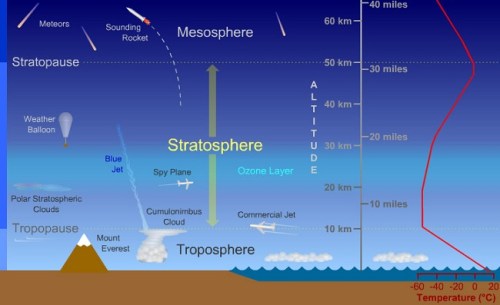
The latter group consists of two satellite based global temperature-measuring organizations. Satellites measure radiance in various wavelengths in troposphere. The troposphere extends about 7 miles above the Earth’s surface and the troposphere is where all of our weather occurs. The radiance measurements are translated into temperatures. In 1979, the University of Alabama at Huntsville (UAH) was the first satellite system to begin reading these temperatures. Start up problems are typical with any new breakthrough technology. For example early on there were problems with orbital decay and also with drift.   The UAH promptly made allowances for those problems as they have  with some smaller ones as time has past. The weather balloons (radiosondies) that have been used for many years, show agreement with the UAH satellite measurements. This is confirming proof of the satellite systems high accuracy and because it actually measures temperature across nearly the entire globe, that makes it the gold standard. The other satellite system is the Remote Sensing System (RSS). UAH and RSS have a few differences in how they make their tropospheric measurements, still the resulting temperatures are in close agreement. The satellites measurements cover about 95% of the Earth’s surface eliminating the use of computers to simulate actual measurements, as is the case with the ground based systems.

The illustration below shows the Earth’s atmosphere with the troposphere being the lowest part.

earth_stratosphere_diagram

The final player in this drama is the Intergovernmental Panel on Climate Change (IPCC). The IPCC is a branch of the UN. It was created to show how man was causing global warming and what the consequences of that would be. No, the IPCC was not created to examine the science of global warming; the founders had already decided man was the cause. The IPCC is programmed to report on the status of their work about every 5 years or so. The IPCC is often said to be the warmer’s equivalent of the “spoken word.” Most of the mainstream media accepts without question any pronouncement that is said to be from the IPCC—in their mind, it is the ultimate authority. Many major newspapers and science journals (and other media, too) do not allow, in their media, skeptical views, research, questions, letters to the editor, etc.

The IPCC produce temperature forecasts. These forecasts are the basis for catastrophic things that will happen—-flood, drought, snow, sea level, vast migrations of people, etc. —–if we do not quit using fossil fuels.

In the next posting, we will compare the IPCC temperature forecasts to the ground and satellite measured temperatures.

cbdakota


The “Kinda” New Warmer Narrative–Ocean Acidification


Because global temperatures were not responding to increasing atmospheric CO2, the warmers began looking for new narratives to use to frighten the public into giving them more money. The oceans were thought to be a good target. To explain why global temperatures were only inching up, they jumped on the sea shellsimagestheory that the heat was being trapped in the ocean. Just like that, the “heat” decided to go into the ocean and not warm the atmosphere. The logic of that proposition was viewed as somewhat problematic, to say the least.

Another narrative was to say that the ocean was being made acidic and that would have a devastating effect on sea life. This narrative, acidification of the ocean, had been around for a number of years. But it needed some spicing up. Former head of NOAA, Jane Lubchenco, referred to ocean “acidification” as global warming’s “equally evil twin.”


Continue reading