BP Tries For Natural Gas In Jordan


BP has begun drilling for natural gas in the Risha field in eastern Jordan near the border with Iraq.  In 2009 BP was given 4 years to explore for natural gas in this field.   After two years of preparation, BP says they expect the to take 3 or 4 months of drilling to prove out.  Jordan is hoping that this effort with BP will lead to the discovery of extensive recoverable gas reserves, which will help cut dependence on oil imports to fuel Jordan’s power sector and industries. According to a posting in Al Arabiya:

The government strategy calls for Risha to produce 330 million cubic feet of gas per day by 2015. The field has a current modest daily output of about 18 million cubic feet. The kingdom, which imports most of its energy, is struggling to meet electricity demand, which is growing by more than 7 percent per year, due to fast growing population and rising industrial needs.

cbdakota

Climate Model Forecasts Proven Wrong


Where would the theory of Anthropogenic Global Warming (AGW, aka: man-made global warming) be if it weren’t for the climate models that forecast devastatingly high temperatures, sea level change that will make hundreds of millions of people homeless, mass extinctions of all manner of creatures, etc? What if those forecasts consistently were in error?  You would have to conclude, that the warmers don’t have a viable theory and they would quickly fade away.  Well, the forecasts are consistently in error and warmers still have not faded away.  So what is going on?

Because it is Father’s Day, let’s look at James Hansen’s (father of the current man-made global warming cult) forecast presented to the US Congress in 1988:

Chart from: James Hansen et al. Global Climate Changes as Forecast by Goddard Institute for Space Studies Three-Dimensional Model journal of Geophysical Research.

The chart forecasts a global temperature increase that will be caused by different levels of CO2 emissions.  Scenarios “A” (blue) which postulated an increase in CO2 emissions by 1.5% per year
 and “B” (green): constant increase in CO2 emissions after 2000
 and “C” (red): no increase in CO2 emissions after 2000The black line is the actual global temperature.

Since 2000, the CO2 emissions have increased about 2.5% per year.  So one would expect the observed temperature to have exceeded the blue line “A”. Yet we see the actual temperature increase matching or perhaps coming in lower than that forecast by the red line “C” that was based upon a forecast of O% per year increase in CO2 after 2000. How many ways can you say FAIL!!!

Hansen’s influential presentation was widely broadcast and had a profound effect on Congress.  If you had been in the Capitol that day, you might have become concerned.   But with time, the Hansen forecast has been demonstrated to be very wrong.   The Chart above came from Wattsupwiththat (WUWT) blog and the comments by readers to the WUWT posting are quite interesting.  The warmers that commented essentially said—well, sure, it was wrong but some things happened; volcanoes, less fluorocarbons in the atmosphere, less methane in the atmosphere and the positive feedback he used is now imagined to be less than it was imagined to be at the time of the Hansen forecast.

Wow, that is a lot of things going wrong considering we are still being told that only CO2 really matters.  Isn’t it amazing that when the forecasts play out for a lot of years (in Hansen’s case, 24 years), only then can you find out if they are really any good.  Forecasting today what the world will look like in 2100 is an interesting exercise but only fools would believe that it was likely to be accurate.

We know that money and control drives the warmers and the politicians to continue this charade.  But the media has bought into this lock, stock and barrel.  What drives them?  I know that bad news (fear of global warming caused catastrophe) sells more papers than good news.  And the falling readership that the mainstream media is experiencing, makes them desperate to continue echoing everything the green alarmists say.  Why are there no latter-day Woodwards and Bernsteins that want to expose the lies after some 20 years of flat global temperatures and failed predictions?   Skeptics are gaining the upper hand with regard to public opinion, but if the media owned up to the facts and began questioning the AGW theory, this round of Lysenkoism could be ended.

cbdakota


Cycle 24 May Update


Not much new. Solar Cycle 24 is tracking the recent forecasts and should reach a Maximum in the Spring of 2013.  Below are the updated through May charts (click on charts to clarify):

cbdakota Continue reading

The Ill-informed Bishop And The Wind Turbines


Continue reading

EPA Gives Honda Fit EV A 118 MPG (eq) Rating


The EPA gave the Honda Fit EV a 118 mpg equivalency rating. This is their best rating yet for a passenger car.  My daughter owns a Fit, IC engine, and gets great mileage and has experienced very low maintenance and up keep costs.  It’s a very good vehicle. But most all of the EPA rating mileage equivalent for EVs and hybrids have come down as the owners face the real world of driving.  The EPA is rating the Leaf at 73 mpg equivalent.  Read my posting of a Tennessee Leaf owner’s trip  here.

The new EPA rating for the Chevy Volt is 38 mpg versus the former 35 mpg.  This change stemmed from an upgraded Li-ion battery that can hold a 16.5 kWH charge versus the former 16 kWH.   Added a half hour to the battery charge time however. To read more click here.

cbdakota

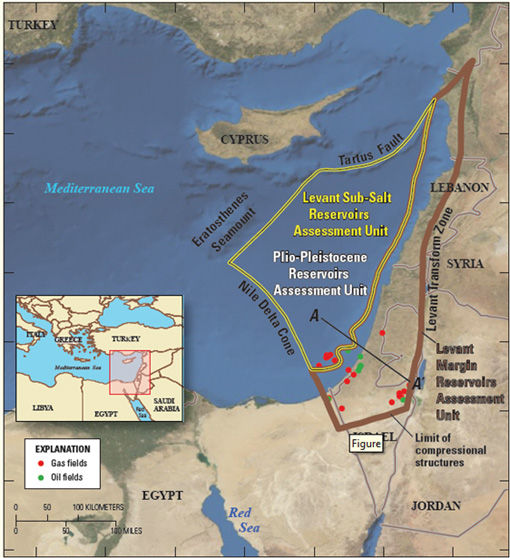
Eastern Med Oil and Gas Discoveries—Israel and Cyprus


Natural gas and oil producers normally are not the way that Israel and Cyprus are characterized, but recent discoveries in the Eastern Mediterranean are changing that perception.

The Levantine Basin in Eastern Mediterranean (Source: USGS)

Israel  Two years ago, in June 2010, the Leviathan, the largest gas field in the Eastern Mediterranean was discovered by Houston’s Noble Energy.  The natural gas reserves in that find that are in Israeli territorial waters are estimated to be something in the range of 25 trillion cubic feet (Tcf).   Some experts are estimating that there might also be up to 600 million barrels of oil.  And that is not all.  The Israeli Tamar field is believed to contain more that 8 Tcf of natural gas. The Energy Tribune’s posting by Michael Economides notes that:

A statement released on Sunday by the Israel Opportunity energy exploration partnership said that prospecting at the Pelagic group of deep-sea fields, west of Haifa, showed a potential of 6.7 Tcf of gas and 1.4 billion barrels of oil.  

These finds are very timely, because Egypt has ended its contract to supply gas to Israel

 Cyprus  In December 2011 Noble Energy announced that their first well in the Cypriot Economic Zone of the Leviathan Field contains up to 9 Tcf of natural gas.   Energy Tribune reports:

The size of the ultimate recoverable gas in the Eastern Mediterranean, according to the United States Geological Survey, is of the order of 200 Tcf of natural gas and 3.7 billion barrels of oil. A dozen new Cypriot blocks, currently in the process of being offered to international bidders, will almost certainly add 50 Tcf, perhaps 75 Tcf to the already discovered.

On-shore delivery from the Levantine basin will not be easy.  The gas is located about 20,000 feet below sea level —6,000 feet to sea bottom and then an additional 14,000 feet of required drilling.) Further it is believed that the gas will need to be liquefied and delivered on shore by tanker because it will be too deep to put in piping. The size and cost of these facilities are the sort of things that can be managed by large oil firms but to date, these companies seem reluctant to work with the Israelis for fear of antagonizing their Arab partners.

The solution as outlined by Economides is:

Israel will need Cyprus to exploit its resources by employing the right size company to construct e.g., LNG or gas-to-liquids (GTL) plants. The size of the resources cannot allow them to even remotely be consumed domestically; export is the only option. The Cypriot and Israel reservoirs should be unified; they are geologically contiguous anyway. Cyprus, in turn, will need the shield provided by Israel in relation to saber rattling Turkey. The Israeli-Cypriot marriage is made in oil and gas heaven.

cbdakota

Not Much Joy In EV Land—May Sales Data


The Chevy Volt hybrid May sales were 1680 up from 1462 in April.  The forecast annual sales of 45,000 seem to be a stretch with only 7057 Volts sold year-to-date.  A little arithmetic says that about 38,000 Volts need to be sold in the remaining 7 months of 2012.

The Nissan Leaf sales of 510 in May were up slightly over the 370 sold in May. Year-to-date leaf sales are 2613. The Nisan people maintain that they will sell 20,000 Leafs in 2012.  But the still under construction Smyrna, Tennessee plant, said to be capable of making 150,000 Leafs annually, is not scheduled to startup until late this year.  Until then, Nissan will supply the market from Japan.

Underperforming would seem to be the proper word for hybrid and EV sales in the US.  High gas prices and still the sales are anemic.  One more example of Obama’s costly green energy plan not living up to his overblown promises.

cbdakota

Solar Panels Don’t Work


Ray Burgess, the President & CEO at Solar Power Technologies Inc posted on the Aol Energy website, “Solar Panels Don’t Work. And No One Knows.” That is a provocative title.  Burgess said: “Solar panels do not work that well. Often far below expectations.  And few know it. Not the owners who depend on power. Not the bankers who finance it. Not the brokers who insure it.”

The economic models that are used to finance, insure and subsidize solar farms assume the solar panels degrade about 0.5% per year. The National Renewable Energy Laboratory (NREL) says that they can degrade as much as 4.5% a year or more.

At this point you may be wondering who or what is the NREL.  According to Wikipedia they are: “The National Renewable Energy Laboratory (NREL), located in Golden, Colorado is the United States primary laboratory for renewable energy and energy efficiency, research and development. The National Renewable Energy Laboratory (NREL) is a government-owned, contractor-operated facility; it is funded through the U.S. Department of Energy (DOE).”   This is not an organization that opposes renewable energy.”

Burgess adds: The latest issue of the leading industry trade journal Photovoltaics International, asks the question: “What is the real quality of the products I am buying?”  Short answer: Nobody knows. In Italy last year, “they discovered that after one year in the field, over 90% of the (solar panels) from a one megawatt project began to delaminate and ended up on the ground.”   “Delaminate: Scientific talk for falling apart. And these panels had all the standard certifications.”

Burgess’ company sells systems that monitor performance of solar farms.  The company’s systems presumably can detect individual problem that are causing substandard performance.  He lists below, some of the performance inhibitors.

“Solar production in the field can go bad for dozens and dozens of reasons: An errant golf ball. A passing flock of geese. Bullets. Leaves. Shadows. Dirt. If a leaf or bird dropping prevents the sun from hitting part of your solar array, that knocks out solar production in an area 36 times the obstruction.”

Now I don’t know how that multiplier works, but I will take him at his word.

The above along with the problem of the inability to schedule energy production due to variability of the Sun, makes this form of energy less appealing.

cbdakota

US Asserts Interest In Arctic


According to a story in Reuters, “Secretary of State Hillary Clinton will assert U.S. interest in the Arctic, where the prospects for abundant oil, gas and new trade routes has been likened to a modern-day gold rush, when she visits the region on Saturday.”  (1 June 12)

Interest is high with nations worldwide vying for access to the Arctic.  “Norway has moved its military operational headquarters into the Arctic Circle, China has development plans for Iceland and countries, including Russia, are laying claim to exploration rights in the once pristine Barents Sea.”
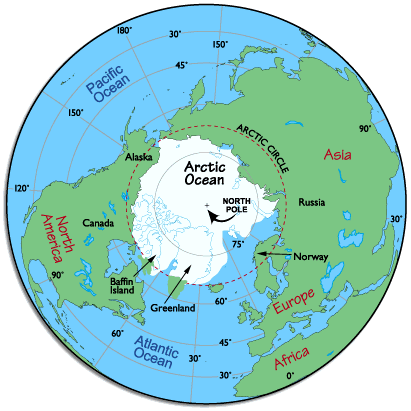
Map courtesy of WorldAtlas.com

It is all about energy.  While our politicians dilly-dally about the oil in ANWR, and fuss over any attempt to develop the resources in the Arctic area, the World’s nations are not waiting our approval.

More comments from the Reuters article:  “Even Russia, the largest provider of oil and gas to Europe is keen to accelerate gas production from its offshore gas fields as soon as possible, or as soon as economically viable.”

The U.S. Geological Survey estimates that the Arctic holds about 13 percent of the world’s undiscovered conventional oil and 30 percent of its undiscovered natural gas resources.

“All the major powers are positioning themselves for this development,” said Ole Arve Misund, director of the University Centre in Svalbard. “The resource has become more available and prospects have already been opened in Norway, Russia, Canada, the U.S. and Greenland.”

ExxonMobil is working with Rosneft to develop blocks in the Kara Sea, off Siberia, despite sea ice for up to 300 days a year.

Gazprom is also working with Total and Norway’s Statoil on the 4-trillion-cubic-metre Shtokman gas field 550 km offshore. Statoil has also established a strong Arctic record with its Skrugard and Havis finds, holding up to 600 million barrels of oil.   

Ole Arve Misund is quoted above saying that all major powers are positioning themselves for this development.  But one of the powers, the present US Administration may be deeply distressed by this major source of fossil fuels and who knows what game they will play to prevent exploitation of these resources.

cbdakota

Cuba’s Hopes For Oil In Florida Straits Hits Dry Hole


Cuba’s oil drilling partner, Repsol says that they have hit a dry hole and are calling it quits.  Repsol, an integrated Spanish oil and gas company, has spent more than $100 million drilling only to come up with no oil.  Currently Cuba relies on Venezuela to deliver $3 billion of subsidized oil each year.  Continuation of this program would be in jeopardy if Hugo Chavez were not to be reelected in the October elections.  An additional threat is Chavez’s health. He has been undergoing treatment for cancer for a number of months.

Cuba’s needs a major oil find to revive its struggling economy.   With Repsol out of the picture, Cuba’s fortunes rest with Petronas, the Malaysian oil company, that has began drilling an exploratory well about 180 miles southwest of Repsol’s dry well.

To read more, see this story in Oil Price.

cbdakota