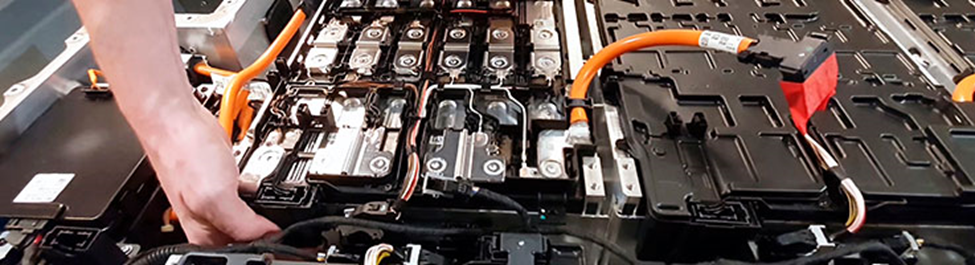
Battery Life and Replacement–It’s the EV battery Stupid, Part 4


I think that the industry has not had enough experience to accurately predict life of an EV battery.

Consumer Affairs speaks to this issue in their July, 2023 blog titled “EV battery replacement cost”.  Their findings are summarized:

“We reached out to five mechanics and technicians from different parts of the U.S. to see how much an EV battery replacement costs for different vehicles, and the average results ranged from $4,489 all the way to a staggering $17,658.

  • All EV batteries will eventually fail to hold a charge and require replacement.
  • It’s hard to pinpoint how long EV batteries will last, but most have a life span between eight and 15 years.
  • Sourcing a replacement EV battery from anyone but your car’s manufacturer is nearly impossible, which is the main reason replacement costs are so high.
  • EV battery repair is a growing industry that may help you avoid the high cost of a replacement, but it’s not commonly available yet.
  • The Federal Government requires the car maker to guarantee 100,000 miles or 8 years whichever comes first. Some warranties only cover the EV battery if it no longer holds a charge at all, while others will cover the replacement of any EV battery that has dropped below 60% or 70% of its maximum capacity.

I do not think that a used EV buyer would have any guarantee on battery that had already met one of those stipulations.

The following chart was assembled by Consumer Affairs after interviewing mechanics around the country.  It may look strange to be dealing with 2014 EVs but that reflects the car’s age using the battery. The Prius is a hybrid with a small ICE engine and a battery combination.

          VehicleAverage parts costAverage labor costAverage total cost
          2014 Tesla Model S$13,500$1,500$15,000
          2014 Nissan Leaf$17,269$388$17,657
          2014 Toyota Prius$3,858$631$4,489

Next Car’s June 2022 posting, “EV Batteries 101: Degradation, lifespan, warranties and more” echos Consumer Affairs posting.  NEXT Car adds:  

“Buying a used Tesla with close to or more than 100,000 miles on the odometer, or holding onto the one you already own out of warranty, is a much riskier decision given the high cost of repairs”. 

cbdakota

EV Battery Charging–Its The Battery, Stupid. Part 3


The Alliance for Automotive Innovation says there are approximately 100,000 public charging ports in the US. The Federal Government is attempting to provide more.  The Fed’s target is 500,000 charging ports. If there were more charging stations, there would be less range anxiety.

The rough number of gasoline/diesel filling stations is 145,000.  Well, if it feels like there is a filling station almost anywhere, why would there need to have 500,000 charging ports?  The answer is because it takes so long to recharge the battery.

The Biden Administration’s plan to put up 500,000 charging ports will probably take a while to accomplish.  Currently, the plan is for each State to install a charging station along their major highways, 50 miles apart. Further, a charging station must be within a mile of an on and off Interstate intersection.

A private party that wants to operate a charging station picks a site for the station.  The site is approved. The Feds will pay up to 80% of the cost and the private party must pay 20% or more.  These stations can cost up to $1million.  Each station must have a minimum of 4 charging ports.

The API says that the average fill-uptakes 2 minutes for an ICE vehicle. Then that vehicle could go 300 to 400 miles of highway driving. 

Examining the EV owner’s options for recharging the battery so as it has range of 350 miles.  (Hour charge to miles range from US Department of Transportation-Charger types and speed.)

Level 1 Minimum cost using house AC outlet.  One hour provides 2.5 miles of range.  So about 6 days to get charged to 350 miles range.

Level 2 Purchasing a charger/installation required. 240-volt system, a home installation.  One hour provides 10 to 20 miles of range.   Using the 20 miles per hour charge would need 17 hours to get 350 miles range.

Level 3 Fast DC.  The public stations are mostly at this level.   One hour charge provides about 180-to-240-mile range. Using 240 mile per hour charge would take about an hour and a half to get 350 miles range.

Tesla Supercharger. Dedicated Tesla charging points.  One hour would give 1000 miles range. The 350-mile range would be done in about 20 minutes.

 Some thoughts:

  • Anyone that buys an EV and uses a level1 must have more money than that sense. For certain, that person has an ICE car in the garage.  The EV is for show.
  • If you buy an EV and you live in an apartment, where you only have street parking, you would have to go to public charging stations.
  • Level 2 requires a professional  installation with costs that can be steep, often a thousand dollars or more.  The charger itself isn’t free.     
  •  Level 3.  If you use FastDC you will spend more money for charges than if you use a level 2 installed system using your cheaper home electricity.
  •  Very important: routine charging with Superchargers and Fast DC degrades the batteries to the point they won’t be able to hold their charge as long.  The fast chargers heat up the battery and that can cause loss of battery range. Tesla says that you should use these fast chargers sparingly.
  • Every charge degrades the battery’s capacity a little.  From Wikipedia:

Capacity loss or capacity fading is a phenomenon observed in rechargeable battery usage where the amount of charge a battery can deliver at the rated voltage decreases with use.[1][2]

In 2003 it was reported the typical range of capacity loss in lithium-ion batteries after 500 charging and discharging cycles varied from 12.4% to 24.1%, giving an average capacity loss per cycle range of 0.025–0.048% per cycle.[3]

  • Public charging stations are often not close to an available place that you can retire to, while you wait for your battery to get charged.  Think of sitting in your car in inclement weather, either hot or cold.
  • Public charging stations are not always reliable. The following is from

. Findings from a 2022 University of California, Berkely study showed that one-quarter of public chargers in the San Francisco Bay Area didn’t work due to “unresponsive or unavailable screens, payment system  failures, charge initiation failures, network failures, or broken connectors”. 

The cause may be lack of income the company gets from charging EVs. The US numbers of EVs on the road are not as many as was predicted.

Charging time is very long.  Charging stations are inadequate for even the small number of EVs on the road.  The fast chargers are desirable, but their use shortens the life of the battery.

cbdakota

Range is the Rage: Its The EV Battery, Stupid


Range is the Rage

Car and Driver say that range is the all-important stat.  Car and Driver posting goes on to say:

 “Whether or not you make it to the next public charging spot, are able to complete your daily commute, or are instead stranded on the side of the road depends on it.

Range is so heavily scrutinized because EVs can travel on average barely half the distance of gas-powered vehicles before they require a “fill-up,” and because gas pumps are far more ubiquitous than fast chargers”.

The amount of charge of the EV’s battery is akin to the amount of gasoline (or diesel) in the ICE’s (internal compbution engine)tank.  The battery charge will determine how many miles your EV can go before it is exhausted. That is equivalent to an ICE running empty of gasoline. Many postings by EV owners are about trying to find an EV battery charging station before the battery is “empty”. see here and here and here .Pretty agonizing and unlike the feeling you have, that there is a gasoline station almost anywhere.  You can get more charge and thus miles of range by getting a bigger, heavier battery, but that drives the cost of the vehicle up.  You don’t have to buy a bigger motor to get more range, if you purchase a smaller, lighter ICE vehicle at a lesser cost. 

The EPA rates highway vehicle range and puts the range number on the vehicle’s window sticker in the show rooms.   They do this for Electric vehicles (EV) and internal combustion (ICE –gasoline and diesel) vehicles. The range provided by the EPA for EVs is almost always an overstatement according to Car and Driver. Car and Driver EV range tests are conducted at a steady 75 miles per hour (MPH). They do this “because highway driving is where range most matters”.  By contrast, ICE vehicles almost always beat the EPA ratings in the 75 MPH tests. This is because the ICE vehicles have transmission gears whereas only a few EV models have transmission gearing.  The EV motors must increase revolutions where the motors are less efficient.

There are other factors that affect range. One of which is temperature.  In cold weather, ICE vehicles heat the cabin using the waste heat that comes from combustion of the gasoline. In the summer, ICE engine heat is dissipated by the radiator. The EVs use a resistive heater that consumes a lot of battery power. 

The South Dakota Electric Vehicle Infrastructure Deployment Plan (SDEVIDP) referenced several tests relative to use of heaters in the cold weather and air conditioning in the hot weather.

 According to field testing performed by the Norwegian Auto Federation, operation on a standardized test course in temperatures ranging 21° F to 37° F reduced EV range by approximately 20% and they also lengthened charging times in cold temperatures. A similar result was observed in dynamometer testing by the American Automobile Association that indicated that without internal vehicle heating, EV battery range dropped by 12% at 20° F, but with the heater in operation, it dropped roughly 41%. Consistent with other studies, at 95° F, EV battery range dropped by 4% without air conditioning and by 17% with air conditioning in operation.

The Idaho National Laboratory conducted a study of EV charging under a broad range of temperature conditions over a nearly two-year period, using data collected from a taxi fleet operating in New York City. The study determined that the time to reach 80% state of charge (SOC) doubled or tripled at temperatures below 32° F.

There is another factor that limits range.  The manufacturers of the EV batteries recommend that you always keep the charge between 20% to 80%.  Not 0% to 100%.  So good management of the battery’s life limits the range to just 60%. More on this during the discussion of battery charging.

Summary

The EV range is usually overstated by the EPA.  To increase range, you would need a bigger battery and that is costly. Temperature, cold or warm, reduce the battery charge.  On a cold day, for example, by as much as 40%  if you use the cabin heater on a cold day.  To extend the battery’s life, it should not drop below 20% or exceed 80%.  You will have to recharge it more often to prevent it from going below 20%,

cbdakota

Its The EV Battery, Stupid!


The title is paraphrasing the Ragin Cajun, political adviser to the Clintons, James Carville. Carville said when asked about the biggest issue in an upcoming election, “it’s the economy, stupid” I contend that the biggest issue for the electric vehicle (EV) is the battery.

The battery represents the proposed transition from gasoline and diesel fuel to electricity.  The transition will not be easy, if at all.  Usually, major transitions have occurred because some new thing is better than the existing thing.  That is not happening here.  The EV is more costly, is less flexible, not as capable and is planned to be charged from an electrical grid that is sourced from wind turbines and solar cells.  The latter, the so-called renewable energy, has not demonstrated that it is capable of keeping the grids supplying a reliable supply of electricity 24/7. Nowhere. Nada. see here But politicians keep throwing money at these schemes.  You must wonder why they would do that.  Well maybe not.

The EV sales are not displacing gasoline and diesel vehicles because they are better.  No.  It is replacing those fuel driven vehicles by Government fiat.  Governments are giving EVs huge subsidies, and enacting regulatory systems making gasoline and diesel vehicles attain goals that are not reachable nor necessary.  Six states have legislated that no gasoline or diesel-powered vehicle can be manufactured or sold after 2030 to 2035. And the Feds are considering that too.

The WSJ blog posted Car Dealers to Biden: EV’s Are Not Selling reporting that 3900 US car dealerships wrote a letter to President Biden saying his EV sales mandate is not working. They told him that:

Dealers have a 103-day supply of EVs compared to 56 days for all cars. It takes them on average 65 days to sell an EV, about twice as long as for gas-powered cars. EV sales are slowing though manufacturers have slashed prices and increased discounts.

But most consumers aren’t “ready to make the change,” in part because EVs are still too expensive. Many apartment renters also don’t have garages for home charging, and public charging networks are spotty with one in four not functional, according to one study.

“Customers are also concerned about the loss of driving range in cold or hot weather,” the auto dealers say. “Some have long daily commutes and don’t have the extra time to charge the battery.

The dealers want the Administration to “tap the brakes” on its proposed tailpipe emissions rules that would effectively mandate that EVs comprise two-thirds of car sales by 2032

The dealers’ letter is an important political signal that progressive climate coercion isn’t as popular as Democrats think. Americans don’t like to be told what to do or what they must buy. As the dealers put it, “many people just want to make their own choice about what vehicle is right for them.” Imagine that.


The liabilities that are built in the EV battery are, to name a few:

  • The Range—how many miles can a charged battery propel a vehicle?
  • How long does it take to charge the battery?
  • What is the life of the battery?
  • How much is the cost of a replacement battery?
  • How safe are these batteries?
  • Will insurance rates be hiked up?
  • If most the materials needed to make a battery are suppled from
    China, is that worrisome?
  • Battery recycling?
  • Major electrical  revisions to supply @ home charging?
  • New fees replacing gasoline tax such as miles driven tax or a tax for charger use.
  • Government overreach?

The future postings will address these liabilities.

cbdakota

Unsold Electric Vehicles Piling Up in Car Dealerships


Epoch Times posted: “Waiting for Buyers to come: Unsold Electric Vehicle Piling up in Car Dealership”: 

The number of unsold electric vehicles at dealers in the second quarter tripled compared to the past year, signaling a weakened demand for the segment, said a recent report by leading auto-dealer data company Cox Automotive.

In the second quarter 2023, the average inventory for electric vehicles (EVs) topped more than 92,000 units on the ground at dealer lots, according to the 2023 Cox Automotive Mid-Year Review presentation. This is up 342 percent compared to second quarter 2022. During this period, the new “EV days’ supply,” which refers to the average number of days a warehouse holds inventory before selling it, rose 166 percent, to 92 days from 38.5 days. While the pace of EV sales is up, it is “not rising as fast as inventory builds,” said Jonathan Gregory, senior manager, Economic and Industry Insights.

Original equipment manufacturers (OEMs) are facing a “field of dreams moment,” he stated. “They have built inventory, and now they wait for buyers to come. This is one of the hottest topics we’ve had this year.”

Brands like Jaguar, Infiniti, and Lincoln had the highest days of supply, at over 100 days. The lowest numbers were seen among Toyota, Honda, Kia, and Lexus, with each brand having less than 30 days of supply.

Tesla continued to dominate the luxury EV segment with a market share of 25.5 percent, followed by Mercedes at 12.5 percent, BMW at 12.2 percent, and Lexus at 11 percent. Among EVs priced above $50,000, Ford held the biggest share at 22.1 percent, followed by Chevrolet at 12.1 percent.”

This is Money UK posting says resale of EVs are not going well in the UK::

Electric cars have endured the worst year in their short history in terms of falling prices with some ‘nearly new’ year-old battery vehicles losing more than half of their value, data shared exclusively with This is Money reveals.

The last 12 months has seen second-hand electric vehicle (EV) values plunge as a result of falling demand and an oversupply of used examples entering the market.

We reveal the 30 electric cars that have nosedived most, all of them shedding in excess of 30 per cent of their value a year ago, with the worst affected plummeting by more than half its average 2022 price.

But have we seen the worst of it for crashing EV prices? A market expert explains his prediction for what will happen to electric car values in the coming months – will they continue to drop like a stone or begin to level out? 

The Verge  Posts the volume of EV sales: “…. this past January for example: EVs made up 7.83 percent of new vehicle sales in the United States, with 66,416 battery electric vehicles and 14,143 plug-in

hybrid vehicles sold. That same month also saw the sale of 950,000 new ICE light-duty vehicles, as well as approximately another 3 million used ICE vehicles.”

Hybrids, remember, have a gasoline engine in them as well a big battery.  So that  66,416 EV were sold, and  950,000 ICEs sold in the same month.  Internal combustion engine sales are (ICE)14 times greater than EV sales.

One of the problems facing the sale of EVs is, to date, the EV industry has virtually no used car market! In addition to the constant EV charging challenges, who wants a used EV that may soon need an expensive battery replacement?

With about 73 percent of all car sales being that of used combustion engine cars, the lack of a resale market for EV’s may be a major problem for the auto industry.

Whether or not the new EVs pick up in sales, the resale picture does not look good.   But if the used car market does not pickup, it will probably be a bad omen for the EV industry.

The next posting looks at the car buyers’ views of EVs

cbdakota

Most of future Electrical Productiion will not be from Wind and Solar, So EVs will be powered by fossil fuels


 Economically developed Nations around the world are pushing the idea that the global temperature is rising unabated to a point where it will become an existential threat to mankind. The problem, they say, is carbon dioxide (CO2) emissions from the use of fossil fuels.  They think that CO2 emissions created by the use of gasoline, and diesel, along with natural gas and coal must be discontinued.  I think that these Nations are planning to subjugate you under the guise of saying they are just following “science”.

A part of their plan is to accomplish this by using electricity produced from renewable energy sources—Wind Turbines and Solar Cells— and make people buy electric vehicles (EV). This plan will not work.  But it will spend trillions of dollars before it is revealed as a failure.  Their plan will not be accomplished because wind and solar are not dispatchable.  Meaning, the Electric grids must provide, unfailingly, power 24/7.  This is accomplished by the use of fossil fuel power that can be ramped up and down to meet requirements. The renewables are not dispatchable because grid operators cannot ramp them up and down.  No wind, no sun, no renewable power. As they are today, EVs will continue to run on electricity made mostly by the combustion of fossil fuels.

Nevertheless, the government will try to force you into buying an electric vehicle (EV).

The EPA announced the new standards require a 49 mpg fleetwide average by 2026, a 33% increase over model year 2021 standards. The EPA said that these tough new tailpipe emission standards are designed to effectively force the auto industry to phase out the sale of gas-powered cars

The target cars are those powered by Internal Combustion Engines—  aka ICE.

And then they are enacting laws that no gasoline or diesel car can be manufactured and sold after some certain date.

California, always the leader in penalizing the people living in that state, has a  new law that it will be illegal to sell  new gasoline-powered cars after 2035.  Nothing from the Biden Administration yet but they are playing with a date to match California.

 Washington Free Beacon carries this story:

“All CARS ARE BAD” Pete Buttigieg’s Equity Advisers Want You To Stop Driiving

Transportation Secretary Pete Buttigieg is appointing a group of “leading experts” to advise him on “transportation equity,” including several who argue that cars cause climate change and promote racism and therefore should be phased out. 

And wouldn’t you know it, they make this issue, “racism”

So the Government is going to phase out all ICEs.   Let’s see how that will work.

Hedges and Company say” Need to know how many cars there are on Earth in 2023? Here is how many cars there are in the world, including trucks, broken down by world region?

1). Asia: 543 million vehicles on the road
2). Europe: 413 million vehicles (288 million in EU plus 125 million in non-EU countries)1
3). North America: 358 million vehicles
4). South America: 84 million vehicles
5). Middle East: 50 million vehicles
6). Africa: 26 million vehicles
7). Antarctica: about 50 vehicles

That totals up to about 1.5Billion.

Basically only the North American and EU are making rules to get rid of gasoline and diesel vehicles. North American and EU vehicles are less than half of the world’s vehicles.

My guess is that the developing nations will not ban ICE vehicles as they will not have much available electricity to power EVs.

How effective will that be?

What does the vehicle situation in the US look like? 

Statistica says:  In the first quarter of 2023, there were around 286 million vehicles operating on roads throughout the United States. 

From a Heartland posting we learn the following:

Historically, internal combustion engine (ICE) car sales in America are upwards of 55 million annually with about 15 million or 27 percent being new and 40 million or 73 percent being used car sales.

With a total of 50 to 55 million ICE vehicles being sold annually for new and used, it’s obvious that the auto industry and the economy has been benefiting and prospering in the used ICE car market.

The average life of an American vehicle is 13 years. For example, the California rule that no new ICE vehicle can be sold after 2035, would be mostly ineffective in that for years there will be grandfathered ICE vehicles on the road. Of course, California  might get really draconian and try to make ICEs illegal own and drive.

The next blog will examine the new and used EV market.

cbdakota

Projected Renewables Two to Five Times More Expensive than Natural Gas Power in New York


Wall Street Journal posting reports:

“New York State Energy Research and Development Authority (Nyserda), large offshore wind developers are asking for an average 48% price adjustment in their contracts to cover rising costs. The Alliance for Clean Energy NY is also requesting an average 64% price increase on 86 solar and wind projects.”

The WSJ goes on to say that:

“The Inflation Reduction Act (IRA) includes hundreds of billions of dollars in subsidies for green energy, yet now renewable developers want utility rate-payers in New York and other states to bail them out.”
“The climate lobby says power from wind and solar is cheaper than from fossil fuels, but that’s true only with generous subsidies and near-zero interest rates. Price adjustments that renewable developers want in New York would make solar and wind two- to five-times more expensive than natural gas power.”

“Don’t be surprised if the state eventually asks New Yorkers to turn down their thermostats or turn off the lights at some hours of the day. The green energy crunch and bailout are coming.”

And this does not seem to be a problem only in New York.  

“Nyserda adds that “requests for inflationary relief on clean energy projects” have also been submitted in California, Connecticut, Hawaii, Indiana, Maine, Maryland, Massachusetts, Michigan, New Jersey, New Mexico, and Rhode Island, among other states. Electric customers will get no such relief when their bills increase.”

cbdakota

The Wall Street Journal posting is behind a paywall. But if you are a subscriber the link is       The Coming Green Energy Bailout – WSJ

Media Misleads by Calling Hillary the First Storm to Come Ashore in 80 years.


The mainstream media said Hurricane Hillary was the first storm to land in Southern California in 80 years.  Well, the Wall Street Journal provided a chart showing that 6 other named storms have come ashore in Southern California in the past 80 years. 

And the media has claimed that Hillary is proof of Climate Change, meaning that the globe Is warming because of the use of fossil fuels.   But, but,  but, the 6 previous ones happened in the last century. How do they explain that?  Easy, they ignore it. The Church of Global Warming does not care about facts.

 Its function is to generate fear.

cbdakota  

China’s CO2 Emissions Are About Triple US Emissions


First thing you should see is the following  chart showing CO2 emissions by nations and by continent.  It looks at major contributors.

The chart tells us that China is the primary source of CO2 emissions.  The chart also shows what the two other major industrialized contributors, the North American continent and the European Union.   The North American Continent is made up of Cananda, Mexico and America with the America being the biggest emitter.  

These numbers are a little dated as the US emissions continue to decrease and the Chinese and Indian emissions are increasing.

Asia, consisting of China, India, Japan, Korea, Australia, etc.  are already emitting twice as much as North America and Europe combined.  Leading the Asian nations are China and India.  They are not going to stop building coal based plants. Their rationale is that they need this to bring the living standards of their people up to our standards.  China and India’s populations are each more than 1 billion. They are on their way to more than triple the emissions difference.  Excluding Japan, Korea, and Australia , many of the other Asian nations are underway with plans to use fossil fuels to create wealth for their people.

China has said that in 2030, they will begin to reduce CO2 emissions.  I doubt that they will, because for years they have announced they were through building coal based power plants.  Rather they continually change their mind and announce they are building more of them.  They are the world’s largest manufacturer of solar cells. So, it is not that they do not have renewable energy access, but rather they are enlightened enough to know that solar and wind will never replace fossil fuels.

And what are we doing?  Why, we are spending trillions of dollars on wind and solar energy sources.   The idea of replacing fossil fuels is an illusion.  Certain factions are touting a future where wind and solar are the sole sources of energy. No North American or European nation have ever been able to supply their customers on a 24/7 basis and it is doubt full that they ever will.  For example, Germany, with wind and solar nameplate capacity in place, that exceeds the nation’s electrical demand, have been unable to run without their fossil fuels plants.

And now, a couple of quotes:  

Even if the United States were to get rid of all fossil fuels, this would only make a difference of two-tenths of one degree Celsius in the year 2100, according to Heritage Foundation chief statistician Kevin Dayaratna.”

And a quote from President Biden’s Climate Tsar, John Kerry.

“The fact is that even if every American citizen biked to work, carpooled to school, used only solar panels to power their homes, if we each planted a dozen trees, if we somehow eliminated all of our domestic greenhouse gas emissions, guess what — that still wouldn’t be enough to offset the carbon pollution coming from the rest of the world,” Kerry said in 2015.

So, why are we doing this?  

cbdakota

The Basis for a Significant Amount of Global Warming Research has become Untethered from the Real World.


.

On November 30, 2020 Roger Pielke, jr  posted “The Unstoppable Momentum of Outdated Science”. It was subtited : “Much of climate research is focused on implausible scenarios of the future, but implementing a course correction will be difficult”.  

It is almost a year and a half since posting but the problem still exists.