Category Archives: EPA

“Recycling In Recent Years Has Become A Money-Sucking Enterprise.”


The Washington Post (WP) posted “American recycling is stalling, and the big dcrecycling61434652573blue bin is one reason why.” The posting was made June 20 and has been sitting in my “things to write about” box for a while. Yesterday’s report on Fox News about Seattle fining residents that put food, recyclable or yard waste in their garbage reminded me of that article.

So what is the reason for the recycling stalling? According to the article, recycling is no longer profitable.   The District of Columbia (DC) Council made a $1.2milion payment to Waste Management last year apparently to keep them recycling DC wastes. In 2011 DC made a profit of $389,000, but the situation has changed.

Continue reading

Hurricanes Typically Peak in Early September, But At The Moment, There Are No Active Hurricanes.


“As we reach the historical peak of the Atlantic hurricane season, there are no active hurricanes in the Atlantic or the Pacific basins. If fact, Wednesday afternoon marked the first time that we had no active hurricanes in the Atlantic or the Pacific since Aug. 26, according to Phil Klotzbach of Colorado State University and blogger for wunderground.com.“  The preceding quote is from a Weather.com posting on 10 September titled “There Are No Active Hurricanes in Atlantic or Pacific as Peak of the Season Arrives

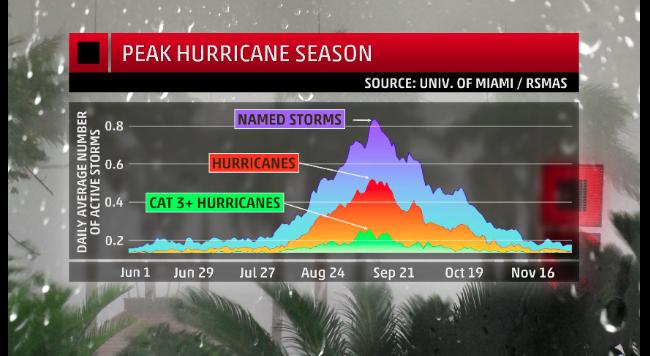
The posting says that normally by this time, we would have had 3 hurricanes but so far we have had but one—Hurricane Danny that existed from 20-22 August.   The postings adds:” When looking at long-term averages of hurricanes and tropical storms in the Atlantic Basin, there is a broad maximum from late August through September. However, within this broader period is a peak that typically occurs around Sept. 10 or 11, depending on what data is used for the calculation.

The following chart illustrates the peak hurricane season.

peaks-by-typehuricame

Continue reading

Global Temperature Pause Now At 18 Years, 7 Months.


A special posting at Climate Depot by Christopher Monckton titled “The Pause draws blood–A new record Pause length: no warming for 18 years 7 months”  theunisonoursideshows that the “pause” in global temperatures continues.

Monckton opens up with:

” For 223 months, since January 1997, there has been no global warming at all (Fig. 1). This month’s RSS temperature shows the Pause setting a new record at 18 years 7 months.

It is becoming ever more likely that the temperature increase that usually accompanies an el Niño will begin to shorten the Pause somewhat, just in time for the Paris climate summit, though a subsequent La Niña would be likely to bring about a resumption and perhaps even a lengthening of the Pause.”

Continue reading

Can We Trust The EPA? Part 5–Alaskan Copper Mine Veto And Coverup


The EPA has put a stop to the development of the Pebble Mine in Alaska. The mine seems to possess a very high value. The mineral rights belong to Northern Dynasty Minerals Ltd. They have posted the estimated resources as follows:

“The 2014 resource estimate includes 6.44 billion tonnes in the measured and indicated categories containing 57 billion lb copper, 70 million oz gold, stock-vector-mine-cart-1487357813.4 billion lb molybdenum and 344 million oz silver; and 4.46 billion tonnes in the inferred category, containing 24.5 billion lb copper, 37 million oz gold, 2.2 billion lb molybdenum and 170 million oz silver. Quantities of palladium and rhenium also occur in the deposit

Continue reading

Can We Trust The EPA?  Part 4– The Sue And Settle Scam


Have you heard of the Sue and Settle scam often used by the EPA? Generally the idea is for the EPA to ask some non-government , big green organization to sue Cartoon - EPA & Energythem regarding some piece of  legislation. The suit is settled by a consent decree where the EPA and the big environmental group achieved their shared goals. The court sets a deadline for comments from other interested parties that is so brief that no one can make meaningful comments in time to prevent legislation from becoming law.

Continue reading

Can We Trust The EPA? Part 3—Secret Science


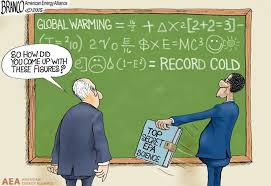
The last two postings discussed an EPA regulation being imposed on coal-based sad_danbo-t2power plants to reduce mercury (hg) and Air Toxics. The regulation is based on questionable/maybe fraudulent science because the full data used will not be provided to other scientists so they may verify the findings.

The use of Secret Science in the above is not the first use. From the Committee Report on the Secret Science Reform Act of 2015:

“EPA also has a record of relying on science conducted outside the Agency that is not available to the public—or to the EPA—and therefore cannot be replicated or verified by independent research- ers. For example, virtually all Clean Air Act regulations under the Obama Administration have been justified by data sets collected by two non-governmental institutions over 30 years ago, which have been withheld from the public and cannot be replicated. In 2014, Congress learned this data either no longer exists, is of such poor quality that modeling results cannot be replicated, or has not been coded to facilitate independent analysis. However, EPA continues to rely on this data to support major regulations. “

Continue reading

Can we trust the EPA? Part 2—Particulate Matter, 2.5 Microns Or Smaller


In the previous posting, it was noted that the Supreme Court stopped enforcement of an EPA regulation that reduced emissions of mercury (Hg) from coal-based power plants. In addition to Hg, the regulation was designated to reduce “Air Toxins”. In this case the toxins are particulate matter—2.5microns (PM2.5) or smaller in diameter.   For perspective, how big is a 2.5micron particle? 2.5 microns are equal to 0.00025 centimeters or 0.000099 inches. Yes, you are right, you can’t see them.

The EPA touts a study that says PM2.5 is dangerous, but they wont share all the secretscienceimagesdata with anyone. Thus, no other science body can confirm or deny the studies results. Secret Science. We are told we must take their word for it.

Continue reading

Can We Trust The EPA? Part I— Mercury


Enforcement of an EPA regulation that would shut down many, if not all, of the US coal based power plants has been stopped by the Supreme Court.

The Science and Environmental  Policy Project  reports:

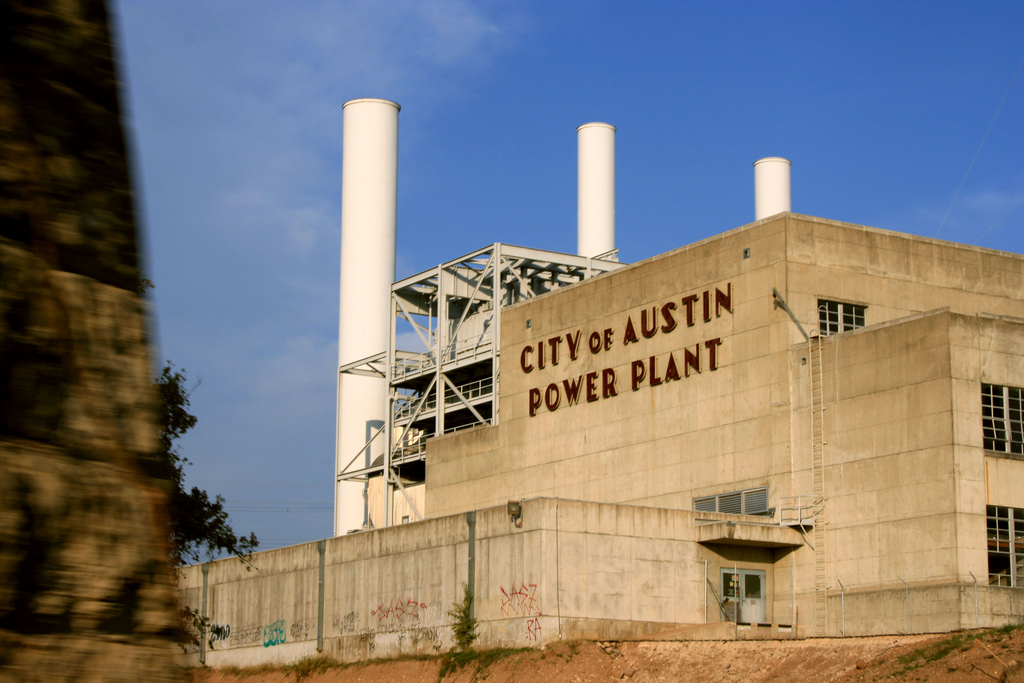
“By a 5 to 4 vote, the US Supreme Court overturned a decision by a lower Austin power-plantcourt enforcing the Environmental Protection Agency’s (EPA’s) rules on Mercury and Air Toxics Standards (MATS) released from power plants. . Writing for the majority, Justice Antonin Scalia said that it was not appropriate for the EPA “to impose billions of dollars in economic costs in return for a few dollars in health or environmental benefits.” The EPA argued that it factored in cost later in the process of crafting the rules, even though the EPA has failed to calculate costs of some of its earlier regulations. In fact, the EPA has long publically asserted that it is not required to include the costs of regulations under the Clean Air Act.”

There it is. The EPA says it isn’t required to factor in the cost of regulations. That is convenient in that they believe that they can do any thing they think is appropriate.

Lets look at the EPA reasoning behind the MATS regulations and see if the regulations are really needed.    Lets look first at mercury (Hg) emissions  which they say are bad for the children. How do they know that? Some actual data on Hg from “Bogus Mercury Scare Used To Shutdown Coal Electricity Generating Plants“:

Mercury Emissions – Natural and Man-Made

Source Emission Quantity, Mg/Year % of Total
Natural 5207 69
Manmade 2320 31
            TOTAL 7527 100
North American Coal Plants 65 0.9

 Data From Global mercury emissions to the atmosphere from anthropogenic and natural sources” Atmos. Chem. Phys., 10, 5951–5964, 2010 by N. Pirrone, S. Cinnirella, X. Feng, et al.

The  total mercury emissions from the North American coal-based plants are less than one per cent of global emissions!!  So the effect on the health of people in the US through reduction of some fraction of the coal-based plants mercury emissions is essentially too small to measure.  Even if they had data showing that Hg was causing a problem, shutting down US coal-based plants to reduce Hg would likely not have any measurable effect at all.

Tests of communities where fish is the main staple in the diet have not shown any measurable IQ problems in the children—(see Bogus Mercury Scare Used To Shutdown Coal Electricity Generating Plants above).  Pat Michaels gave a talk at the 10th International Conference on Climate Change where he reported the EPA,  developed their cost model using a hypothetical group of 240,000 women that would give birth to a child. From this they claimed to have calculated the harm caused by Hg to our nation’s children. Because some fish do accumulate Hg, this pretend group of women would pretend to each eat 300 pounds of fish per year. Almost a pound per day on average.

The EPA decided that each child had a resulting loss  of 0.00209 IQ points. And they calculated that loss of IQ would yield a $1425/per year loss in income per child. The grand total loss annually for the nation would be $3,350,000. If you are not rolling on the floor laughing your behind off, I am very surprised. Only hypothetical people in the US eat 300 lbs of fish per year. IQ scores have a +/- 10 points 95 % confidence level. And the EPA has audacity to think that a 0.00209 IQ loss can actually be measured and used to provide meaningful data?

So much for the Hg scare.

Next we will look at the secrete science behind the EPA’s claim that certain air toxics are potential killers. But that will take up some more words so it will be saved for part two.

cbdakota

Tenth International Conference on Climate Change


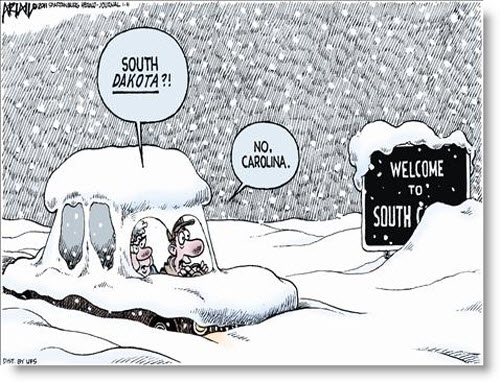
global-warming-south-carolina-political-cartoonI attended the “Tenth International Conference on Climate Change” held in Washington, DC on June 11-12, 2015.   It surpassed my expectations. The panel presentations were uniformly excellent. While I consider myself to be reasonably well informed regarding this topic, I realized that are certain important areas of which I knew little.     For example I learned many things about the way the EPA operates that makes me very angry. Several of the current Republican candidates for President have announced that if they are elected they plan to shut down the EPA and let the State’s environmental groups handle these issues.   I plan a future posting about this topic.

Mainly the Conference covered global warming science. However there were some tributes to contributors who have made an impact.   One interesting presentation was Christopher Monckton’s defense of Dr Willie Soon.

The entire conference is on video. It can be seen by clicking on this link

cbdakota

Green’s Say That Computer Projections Are Just Basic Physics- Ok, But They Only Use A Very Small Portion Of The Physics


Basic physics?   Far from it. The greens are trying to sell this. A recent posting on this site has a video in which Carol Andress of the  Environmental Defense Fund uses this line in a debate with Marc Morano.   Ms Andress seems particularly ill informed so she had to resort to this line of “Just Basic Physics”.

Doug Hoffman on his blog site, The Resilient Earth, had this so say about Basic Physics:”

It should come as no surprise that General Circulation Models (GCM), the basis for more comprehensive computer climate models, are based on differential equations, as are weather forecasting models and hurricane path prediction models. As we all know, weather forecasts are not very accurate, only giving a general idea of conditions a few days out, and hurricane models generally cannot predict the point of landfall until just before a storm comes ashore. But GCMs are different from weather programs even though they use some of the same equations. That is a refrain often repeated by supercilious climate modelers. It is true that climate models also include extra factors like sea ice models and “parametrization” for things like clouds. Unfortunately for them their models are not immune to the laws of computation that make their short term cousins grow more and more inaccurate over time.”

Continue reading