Category Archives: Solar Flux

Solar Cycle 24–April Update


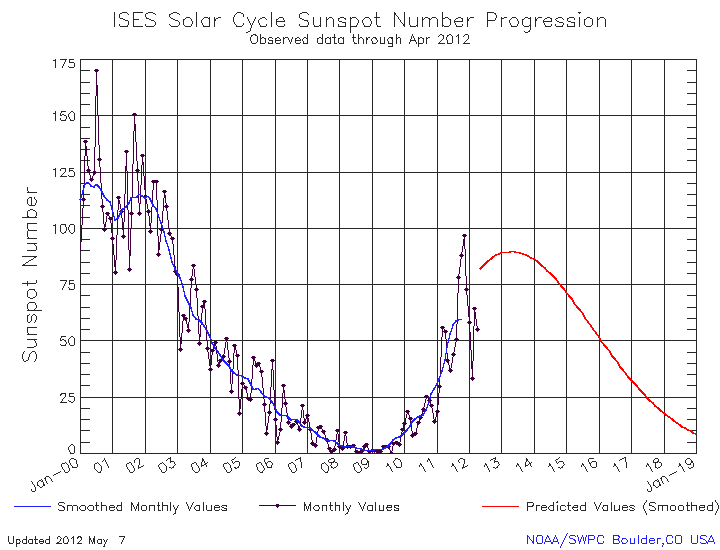
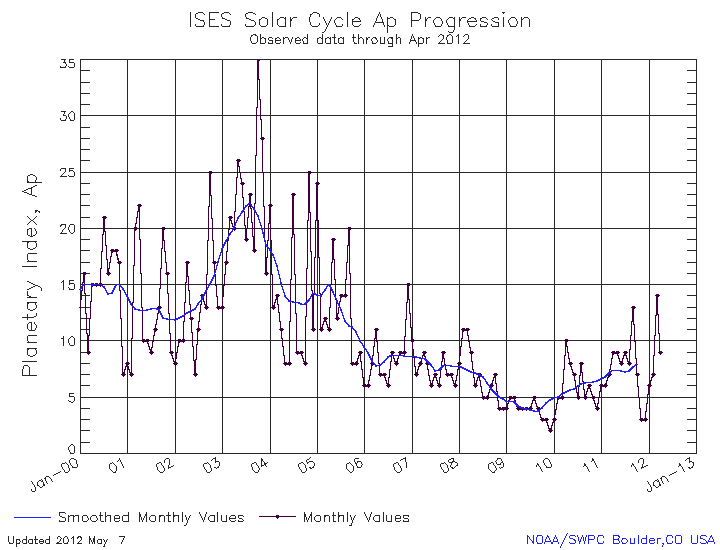
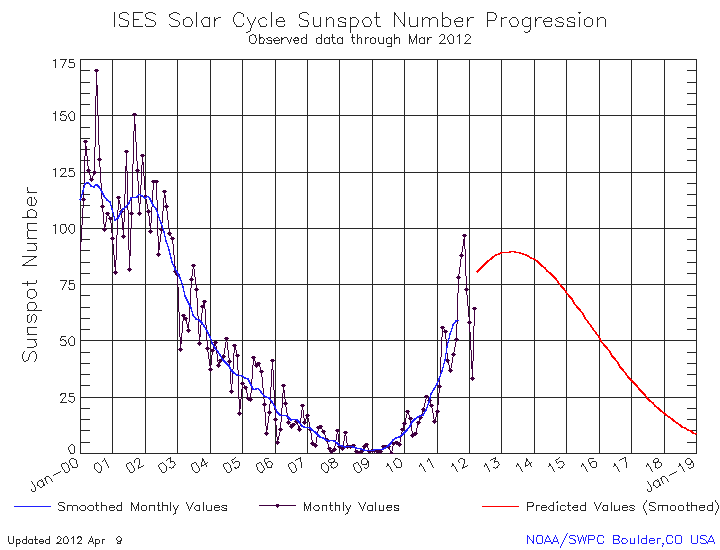
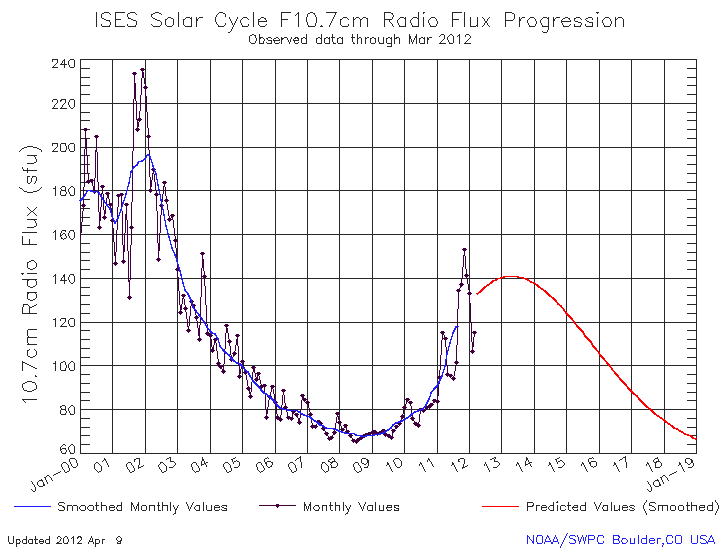
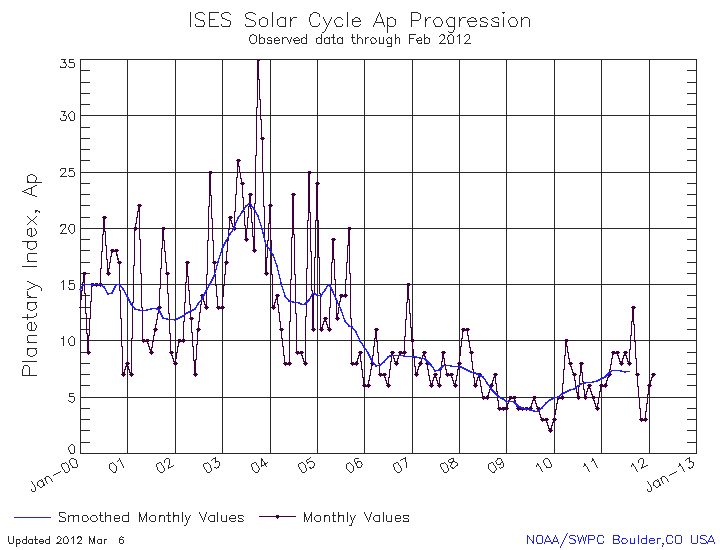
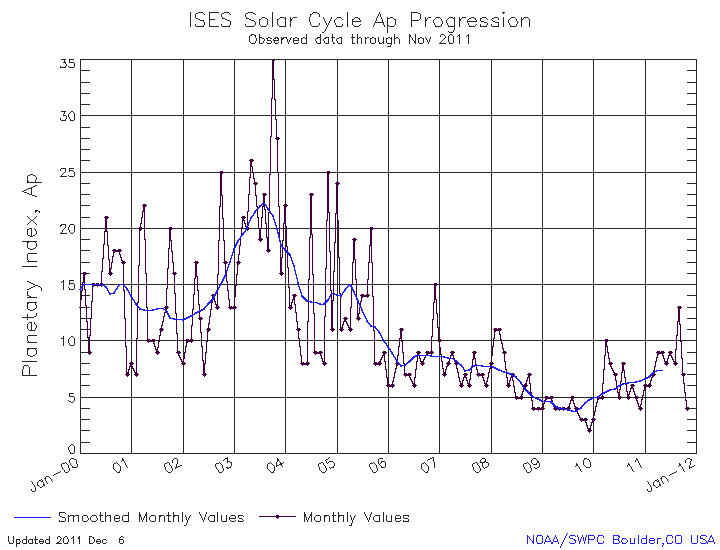
Generally speaking, Solar Cycle 24’s April sunspots numbers, F10.7cm flux and the geomagnetic field Ap index all indicate reduced solar actively.  NASA as well most of the experts in this field agree that Solar Cycle 24 will be a record setter of a sort—least active in about 100 years.  One need not base this on computer models or some consensus, however.  All that is required is to look at the data.  I do not think anyone has a handle on why Cycle 24 is acting this way.  There are many theories and perhaps one of them is correct. Will Cycle 25 continue this downward trend?  Click on the charts to improve clarity.

cbdakota

Solar Cycle 24 March Update


Solar Cycle 24 activity picked up in March.  Several coronal mass ejections (CME) came our way thanks largely to the sunspot group 1429.  March began  with a CME directed toward Earth.  Although the warnings suggested more severe problems than actually occurred,  it still was a reasonably strong storm. The Sun’s rotation brought sunspot 1429 back again at month-end and it provided a little more excitement.   A good summary of the solar activity in March can be found on the Solarham.com site.  To take a look at the summary,  click here.  This solar activity and it’s affect on the Earth’s geomagnetic field can be seen on the chart below: (click on charts to improve clarity)

Both the sunspot number and the F10.7 flux were below the predicted  monthly numbers in March but seem to be generally following the forecast Solar Cycle 24 forecast path.  See charts below:


Cycle 24—February Update


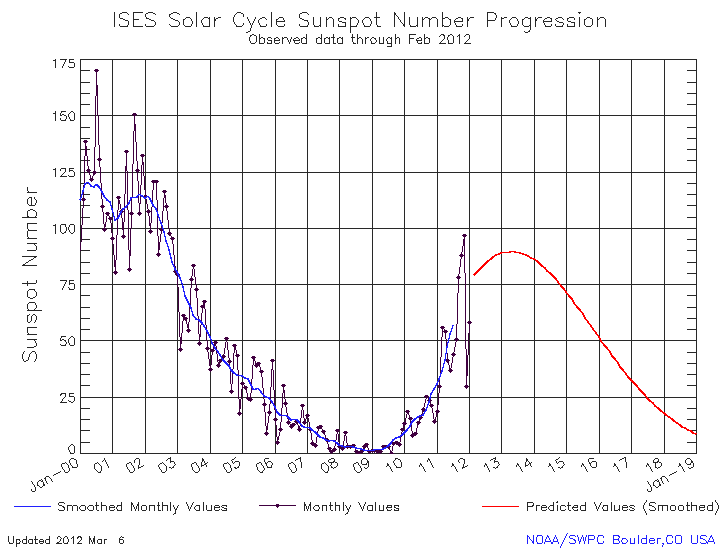
Cycle 24 activity took another drop in February.  The Sunspot number for February was about 30 versus the 60+ in January. (Click on Charts to expand.)

That’s a major drop in the sunspot number.  Cycle 24 certainly looks like it will be the least active cycle in the last hundred years.

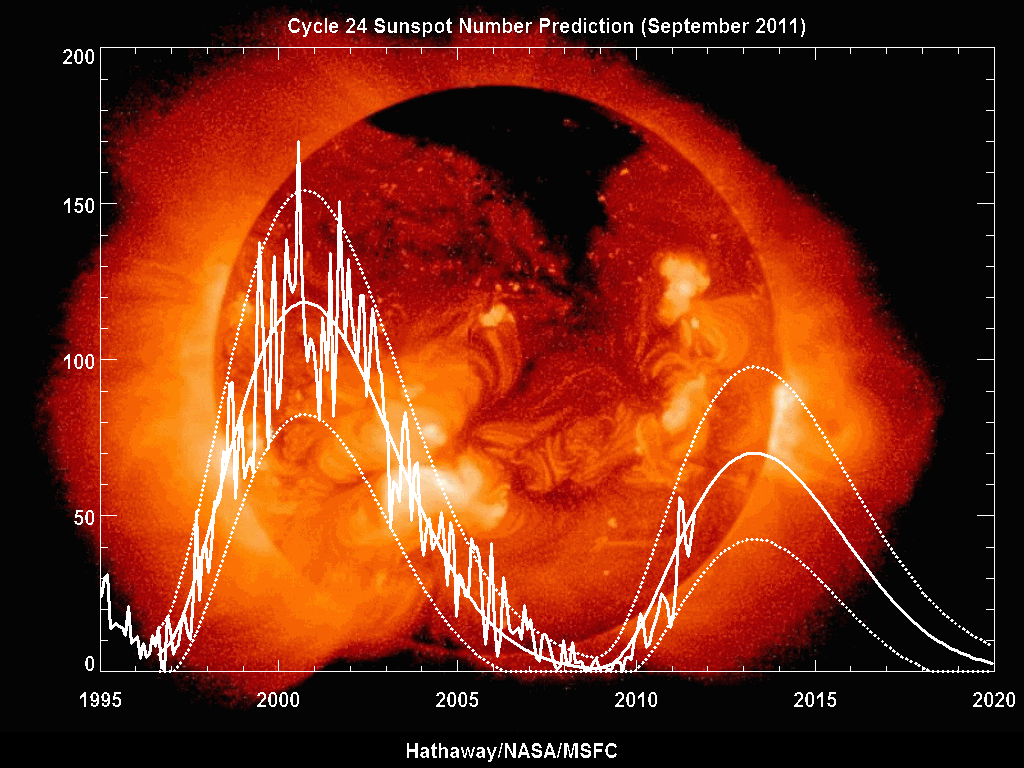
Dr Hathaway of NASA has again revised his forecast of Cycle 24 Sunspots.  He now says that  the Cycle 24 sunspot number will peak (maximum) at 59. Below is his March 2012 sunspot number forecast:


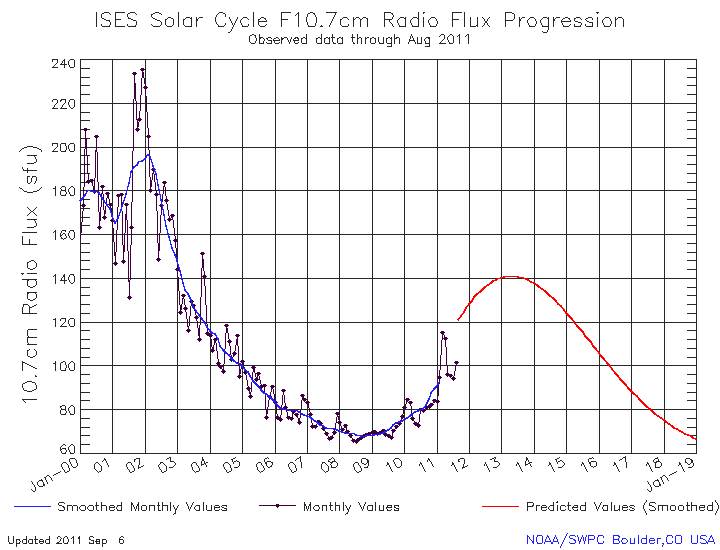
F10.7 cm radio flux is down as well.  First shown on the NOAA chart followed by Dr Hathaways revised chart:

And the magnetic activity as indicated by the Ap index remains low:

cbdakota

Cycle 24 January Update


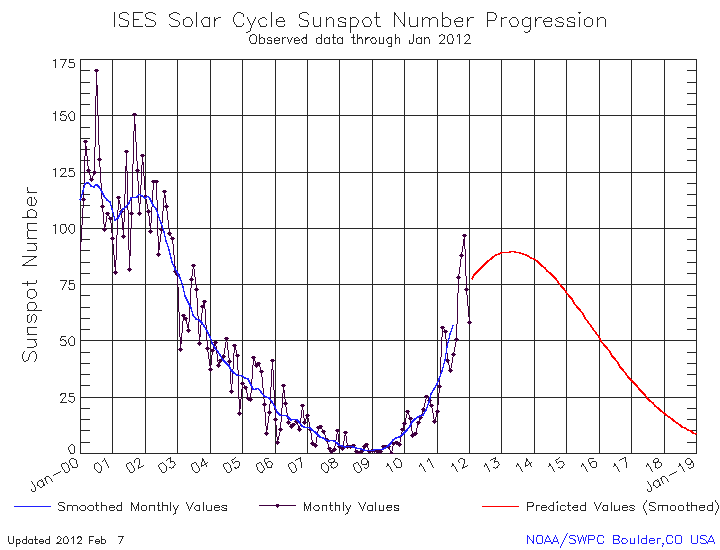
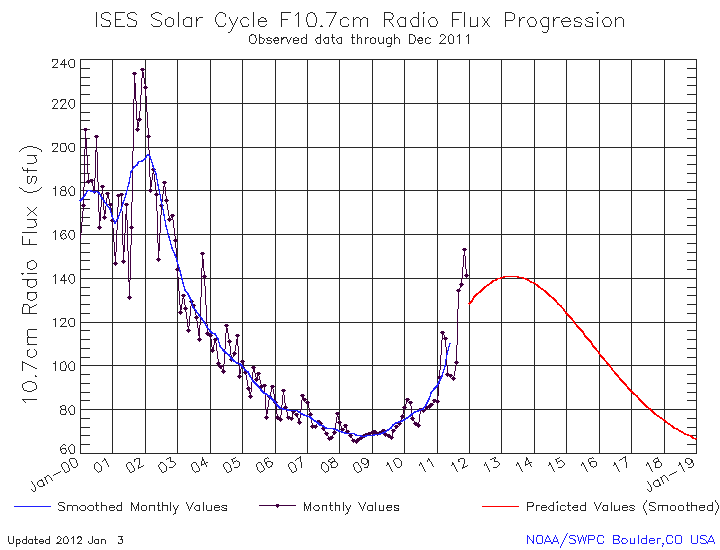
Cycle 24 activity in January was low.  Cycle 24 solar maximum is probably about 18 months away.   The January sunspot number and the F10.7 flux are following the NASA forecast.  The very low Ap index seems confirm that this cycle is likely to be much less active than Cycle 23.  See the charts below, all courtesy of NOAA/SWPC. (click on charts to enlarge)

cbdakota


Solar Cycle 24—Less Active in December.


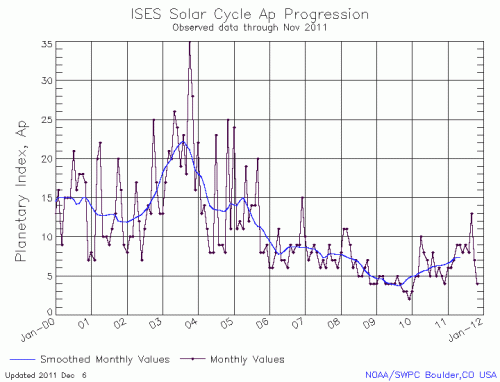
Cycle 24 became a little less active in December.   The charts for Sunspot numbers, F10.7 solar flux and Ap progression are shown below.


cbdakota


Cycle 24 November 2011 Update


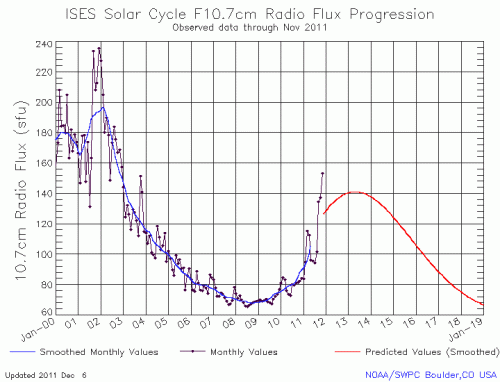
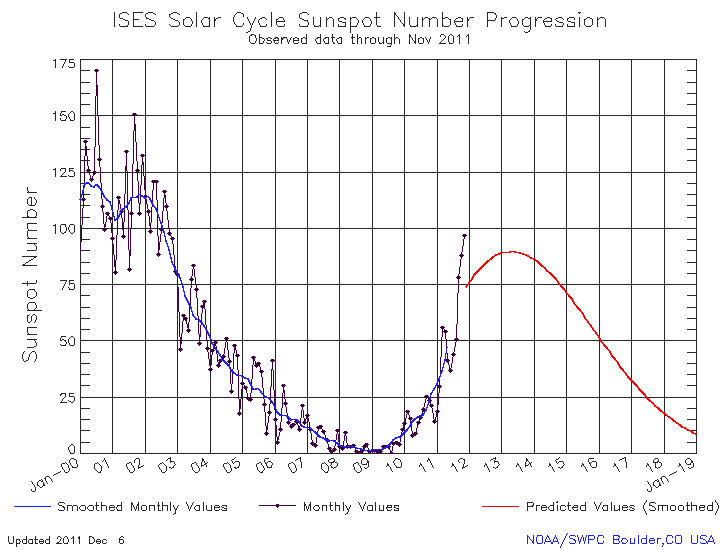
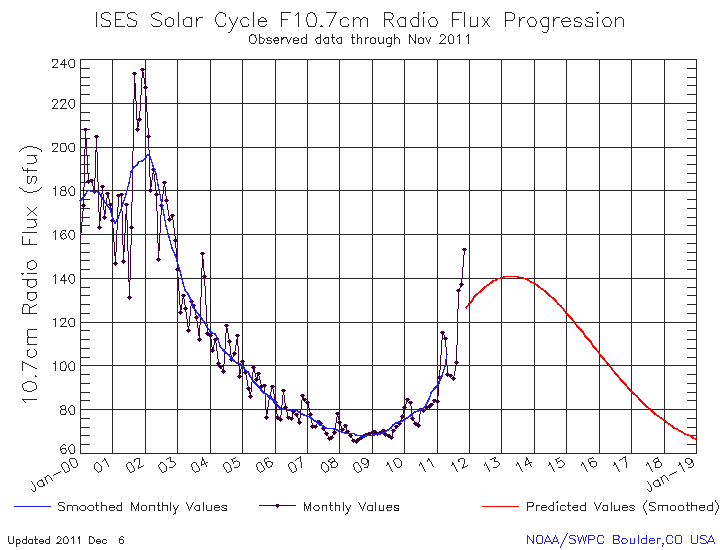
November Cycle 24 monthly sunspot count was nearly 100, which is by far the most active period since the cycle began.    The same goes for the F 10.7 Radio Flux that racked up a value of about 155.  But of these numbers are well below those of Cycle 23 at its peak.  Cycle 23 peak sunspot count was 170 and its F10.7 was about 235.   See the  November NOAA/SWPC charts below:

CLICK ON CHARTS FOR BETTER VIEW

Solar Activity/Geomagnetism

The Ap index is a good proxy for overall solar activity. For two months it has declined.  We are seeing Cycle 24 peaks in F10.7, and sunspots simultaneously with this drop in Ap.  It may mean that the spots and F10.7 may soon be trending downward as well.

If you  are interested,  the following is a brief explanation of the various ways geomagnetism is expressed.

The magnetic activity indices K, Kp and ap are designed to measure the variations in the geomagnetic field that arise from current systems caused by regular solar radiation changes. Other irregular current systems produce magnetic field changes caused by the interaction of the solar wind with the magnetosphere, by the magnetosphere itself, by the interactions between the magnetosphere and ionosphere, and by the ionosphere itself.

The planetary 3-hour range index Kp is the mean K-index from 13 geomagnetic observatories.  The scale is 0 to 9 expressed in thirds of a unit, 5-  is 4 2/3, 5 is 5 and 5+ is 5 1/3.  This planetary index is designed to measure particle radiation by its magnetic effects.  The 3-hourly ap (equivalent range) index is derive from the Kp index as follows:

Kp = 0o   0+   1-   1o   1+   2-   2o   2+   3-   3o   3+   4-   4o   4+

ap =  0     2     3      4     5     6     7       9    12   15    18     22   27   32

Kp = 5-    5o    5+   6-   6o    6+    7-     7o     7+     8-     8o     8+    9-     9o

ap = 39   48   56    67   80   94   111  132    154   179   207  236  300  400

Now one more derivation to get to the Ap index.   The  Ap index is defined as the earliest occurring maximum 24-hour value  obtained by computing an 8-point running average of successive 3-hour ap indices during a geomagnetic storm event.

cbdakota

September Solar Cycle 24 Activity Increased


September Sunspot and Flux (F 10.7) data indicate a step change in Cycle 24 activity.  It was enough to cause Dr Hathaway to revise his Sunspot prediction chart once again.  He raised all three ranges, high, mid and low upward.  The mid-range was bumped up about 15%. (Click on Charts for better view.)   The Sunspot chart from NOAA/SWPC shown below indicates a monthly value increase from about 50 to 80 sunspots.  This chart suggests that the actual data is on track to match their prediction. And the Solar Radio             flux is tracking the NOAA/SWPC prediction. The Sun has a mind (or some kind of mechanism) of its own. To date in October   the Planetary A index is low and this usually means a less active Sun.  Will the numbers for Sunspots and Solar Radio Flux for the month of October drop?   Put in a planetary a index.   cbdakota

If They Could REALLY Model Global Climate Only One Model Would Be Needed


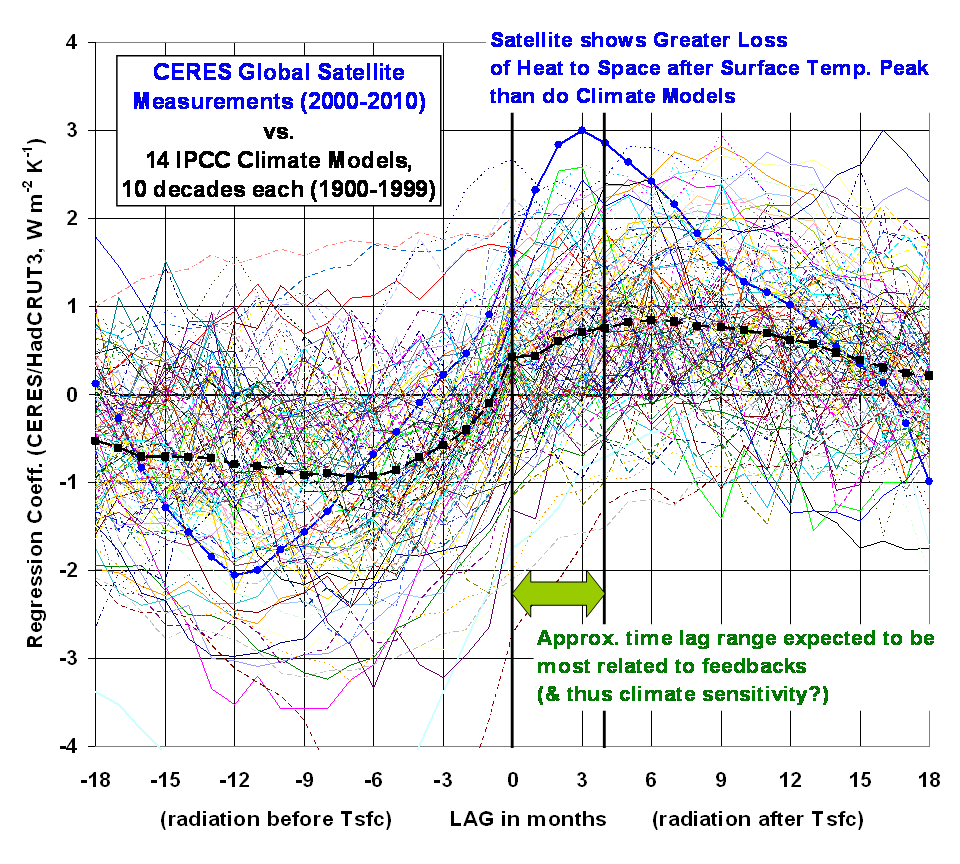
The chart below is from Dr Roy Spencer’s blog “Global Warming”.  It shows the output from 14 different climate models versus the CERES Global satellite measurement of heat loss into space.  This chart was assembled in response to criticism by Warmers that he had cherry picked the climate models he used to contrast their performance versus his work in a recently published paper in Remote Sensing. Following the post publication criticism, Dr Spencer has done a little tweaking but nothing that changes his conclusions.   See here  and here for discussion of this issue.

But this posting is not to review the bidding on Dr Spencer’s paper.   It is to talk about the Warmer’ Global Climate Models.  Whenever I see this assembly of Warmer Global Climate Models output, I wonder why anyone believes the predictions they make.  If they could REALLY model our global climate they would only need one model.   Instead, all 14 give different results!!!   Does that really instill you with a lot of confidence in their ability to do skillful prediction?    What the 14 models do is allow them to make predictions based upon the most extreme model output.  It also allows them to match just about any condition at any time with at least one of the models.  Think—-A stopped watch tells the right time two times a day.

cbdakota

Solar Cycle 24 August Update


Solar Cycle 24 August Sunspot and Solar Flux data continues to paint a picture of a much less active Sun when compared against the previous Cycle 23.

First, David Hathaway’s September edition of his sunspot predictions. Hathaway has a mid, high and low range chart with the actual data slightly below the mid-range forecast.  The Hathaway midrange predicts a maximum monthly high of about 70 Sunspots in early 2013.   Cycle 23 experienced a maximum monthly high of about 120 in 2001.

NOAA  sunspot prediction chart has only a single line which predicts a maximum monthly of about 90 sunspots.    It is shown below:

Solar flux through August appears to be trending below the NOAA prediction for Cycle 24.  The NOAA Cycle 24 solar flux prediction is for a peak of 140 in 2013.   This contrasts with  the Cycle 23 maximum of about 195 in 2002.    See the NOAA chart below:

cbdakota