Category Archives: Oil and Gas Exploration

State By State Study Shows Unconventional Gas Is A Major Boon For The US Economy


A  previous posting, “Fracked Natural Gas Changing The US Economy”,  discussed the impact that fracked gas (aka, shale gas) is having and will continue to have on employment, investment, natural gas (NG) price (current and future), and Governmental Income in the US.  That discussion was based upon a study by IHS Global Insight that they released in December, 2011, This posting will review the details of a new IHS study released in June 2012 which totals all the sources of  unconventional NG— shale gas, tight sands gas and coal bed methane—and projects the total impact these unconventional NG sources have on the Nation and each of the lower 48 States plus DC.

There are 20 States in the lower 48 that are considered unconventional NG producers.  In addition to the TOP 10 employment producers shown in the chart below, the other ten are Alabama, Illinois, Kansas, Kentucky, Mississippi, Montana, New Mexico, New York, Virginia and West Virginia,  The other 28 plus DC are considered non-producers of unconventional NG.

Let’s begin with employment resulting from the exploitation of the unconventional NG. 

TOP 10 UNCONVENTIONAL OIL PROUDUCING STATES
 EMPLOYMENT CONTRIBUTION  
Number of Workers    
 

2010

2015

2035

State      
Texas

288,222

385,318

682,740

Louisiana

81,022

124,782

200,555

Colorado

77,466

126,525

127,843

Pennsylvania

56,884

111,024

270,058

Arkansas

36,698

53,919

79,723

Wyoming

34,787

45,763

78,792

Ohio

31,462

41,366

81,349

Utah

30,561

36,593

50,839

Oklahoma

28,315

41,763

69,261

Michigan

28,063

37,926

63,380

       
Top 10 total

693,481

1,004,979

1,704,541

Prod States

826,355

1,195,346

2,007,902

       
US Total

1,008,658

1,463,450

2,438,877


The order of ranking is based upon the 2010 employment numbers. I have a little trouble with the display as it uses numbers down to the single digits out of millions; however, it does not take away from the forecast of an impressive growth rate.  The “US Total” includes the induced jobs in the non-producing States that benefit from the low-priced plentiful NG.   

IHS uses the following system to develop their results: The analysis of unconventional gas development and its contribution to the US regional economies was conducted using a top-down/bottom-up approach. The contribution was assessed separately for direct, indirect, and induced contributions defined as follow:

• Contributions of unconventional gas are those activities required to explore, produce, transport, and deliver natural gas to consumers or to provide critical supplies or onsite services that support unconventional gas activity.

• Contributions are defined as activities in outside industries that supply equipment, material and services for the development of unconventional gas and its tier suppliers.

• Contributions are the economic effects caused by workers spending their wages and salaries on consumer goods and household items.

Their study forecasts that nearly $3.2 trillion in investments will be made to  develop  unconventional gas  between 2010 and 2035.

The following IHC charts show other effects from their study,


CONTRIBUTION TO GOVERNMENT REVENUE
         
        $ million  
   

2010

2015

2035

2010to2035
Producing States

28,034

41,090

71,806

1,255,034

Non-Producing States

5,758

8,246

13,317

243,701

           
US Total  

33,793

49,335

85,123

1,498,734

These monies in this chart are derived from the expected Federal, State and Local tax revenues and from royalty payments.  The last column is the cumulative no. of dollars for the period 2010 to 2035.

US VALUE ADDED      
      $Millions  
   

2010

2015

2035

         
Producing States

118,077

174,037

295,897

Non-Producing States

15,328

22,479

35,831

         
US Total  

135,405

196,516

331,831


IHC defines this chart as follows: The commonly used measure of GDP, which is simply the sum of the value added across all products and services produced in the United States, is generally considered the broadest measure of the health of the US economy. Value added to US GDP is defined as the sum of labor incomes, corporate profits, indirect business taxes paid, and depreciation. Annual value added to GDP from unconventional gas activities was more than $133 billion in 2010 and, by 2015, is projected to approach $200 billion. The majority of the value added to GDP—nearly 90%—over the 25-year forecast horizon is generated by unconventional gas production activities that take place in the 20 producing states.

IHC concludes that: Unconventional gas activity is expected to make a significant contribution to all of the economies of the lower 48 states over the next 25 years. Traditional oil and gas producing states like Texas and Louisiana will continue to lead the way in terms of their absolute contributions to the US economy. But many new and emerging energy states will drive much of the growth in the coming years, and the economic activity generated by this increase in unconventional gas activity will also reach well beyond the traditional unconventional producing states.

The full report can be seen by clicking here.

cbdakota
Fracked Natural Gas Changing The US Economy


According to a recent report issued(12/2011) by IHC  Global Insight**, shale gas (fracked natural gas) has changed the US energy outlook and the economy.   In 2010, shale gas provided 27% of the US natural gas (NG).  IHC forecasts that by 2035, shale gas will provide 60% of the US NG production.  Without the shale gas, a NG supply shortage would have necessitated the importation of liquefied natural gas(LNG). Today’s price of somewhere around $3 to $4 per million BTUs would likely be in the range of $10 to $12 per million Btus if importation had been necessary.  Longer term,  IHC forecasts 2035 NG price at $7.90 per million Btus (All values in their report are in constant 2010 dollars.) thanks to shale gas.

 The job creation due to shale gas has been outstanding and IHC forecasts continued increases in jobs.   IHC reports that shale gas, by 2010, had supported over 600,000 jobs.  They forecast jobs to grow to 1.6 million by 2035.   

There are other benefits as well.  In 2010 the industry contributed $18.6 billion in governmental tax revenues and royalty payments.  By 2035 the cumulative contribution of taxes and royalties are forecast to be $933 billion.   Additionally,  the capital expenditures made between 2010 and 2035 are forecast at $1.9 trillion.

In the future, electricity prices are forecast to drop by 10%  and parts of the chemical industry will be revived.  Our domestic industries will become more competitive because of the lower cost of natural gas as feedstock and NG’s impact on electrical cost.

Although there will be some redundancy relative to the preceding discussion,  the Key Findings page for IHCs report “The Economic and Employment Contributions of Shale Gas in the United States” is an excellent summary.  It follows:

By 2010, shale gas had grown to 27% of total US natural gas production, and by September 2011,it had reached 34%.

• By 2015, that share will grow to 43% and will more than double, reaching 60%, by 2035.

• Nearly $1.9 trillion in shale gas capital investments are expected between 2010 and 2035.

• Capital expenditures are especially strong in the near future, growing from $33 billion in 2010 to $48 billion by 2015.

• In 2010, the shale gas industry supported 600,000 jobs; this will grow to nearly 870,000 in 2015 and to over 1.6 million by 2035.

Growth in the shale gas industry will make significant contributions to the broader economy in terms of Gross Domestic Product (GDP) and tax revenues:

• The shale gas contribution to GDP was more than $76 billion in 2010. This will increase to $118 billion by 2015 and will triple to $231 billion in 2035.

• In 2010 shale gas production contributed $18.6 billion in federal, state and local government tax and federal royalty revenues. By 2035, these receipts will more than triple to just over $57 billion. On a cumulative basis, the shale industry will generate more than $933 billion in federal, state, and local tax and royalty revenues over the next 25 years.

• The extent of job and GDP contributions reflect the capital intensity of the shale gas industry, the ability to source inputs from within the United States, the nature of the supply chain, and the quality of the jobs created.

The growth of shale gas is leading to lower natural gas and electric power prices and increased productivity:

• The full-cycle cost of shale gas produced from wells drilled in 2011 is 40-50% less than the cost of gas from conventional wells drilled in 2011.

• Without shale gas production, reliance on high levels of liquefied natural gas (LNG) imports would influence US natural gas prices, causing them to increase by at least 100%.

• The lower natural gas prices achieved with shale gas production will result in an average reduction of 10% in electricity costs nationwide over the forecast period.

• By 2017, lower prices will result in an initial impact of 2.9% higher industrial production. By 2035, industrial production will be 4.7% higher.

• Chemicals production in particular stands to benefit from an extended period of low natural gas prices, as it uses natural gas as a fuel source and feedstock. Chemicals producers have already signaled their intentions to increase US capacity.

• Savings from lower gas prices will add an annual average of $926 per year in disposable household income between 2012 and 2015. In 2035, this would increase to just over $2,000 per household.


 It is well worth your reading the full report which can be accessed by clicking here. It is intended that the next posting reviews the IHC report on unconv entional gas’s c ontributions by State.  That posting is to be followed by a look at a similar report by the Bookings Institute on Green Jobs.

cbdakota

**IHS  Global Insight is one of the world’s leading economic analysis and forecasting firms.


Strike Two For Cuba And Gulf Of Mexico Oil


The latest deep-water drilling operation off the West Coast of Cuba has been called off. The exploratory well by PC Gulf, a subsidiary of Malaysia’ Petronas and Gazpomneft of Russia, has been declared not commercially viable.  In May, Repsol’s said their drilling in this field was a failure.

Cuba, as noted in the previous report about this potential oil field, badly needs the money that they hope to obtain from this drilling.  They are also worried about the fate of Hugo Chavez of Venezuela, as he has been supplying Cuba with below market priced crude.  If he dies or is deposed, it could be a real problem for Cuba.

Some estimates of the crude in the field being explored are as high as 9 billion barrels. The field is in ultra deepwater.  Ultra deepwater is defined as where the seafloor at the drilling site is 5000 ft (1524 m) or more below the sea surface. The PC Gulf well was drilled to 15,300 feet below the seafloor.  The lease cost for a platform to accomplish the drilling is about $500,000 per day according to a report by the Associated Press.  There is only one such unit now available for the Cuban drilling and it will be used by the next company to try their luck—-the Venezuelan state oil company PDVSA.

cbdakota

Why Does The US Have The Lead On Shale Gas?


The United States (US) is now ranked as the world’s leading producer of natural gas.  The Wall Street Journal (WSJ) says that this lead is partly due to the abundant shale resources we have—though many other countries have those too.   Partly due to our technological leadership in developing hydraulic fracturing (fracking)—but these techniques are known all over the world now.  The edge is really a result of private ownership of subsurface mineral resources.   Almost no major country recognizes full subsurface private property rights, except the US.  Quoting from the WJS: “….this blessing of American jurisprudence helps explain one of the few bright patches in the Obama economy—the booming production of shale gas and increasingly, oil.”

There is a profit motive driving the property owner as well as the driller. Typically the property owners get a royalty checks from the driller representing a percentage of the worth of the value of oil produced. Often the royalty percentage is 12.5%.  (My home in Texas was built well after the East Texas oil boom.  By then all the subsurface mineral rights had been sold/leased and my deed spelled out that I had no ownership. There were number of wells back in the woods behind my house. Someone was getting royalty checks, but alas, it was not I.)

But many people in North Dakota (Bakken Shale) and Pennsylvania (Marcellus Shale), for example, have leased their mineral rights and natural gas is being produced.  And the landowners are getting royalty checks!

France and Bulgaria have banned fracking. Because these governments own the subsurface property rights, there has been no pushback from the landowners.   In other countries where fracking has not been banned, the governments are moving at a glacial pace.

Quoting the WSJ: “ ….the deeper lesson is that this is a revolution that came about not through government planning or foresight, but through a combination of individual risk-taking and private property. “

Thank heavens for these privately owned resources.  Unfortunately, favorable outcomes are not happening where the US government has control of natural gas and oil.  The Obama Administration puts up road blocks in the way of the exploitation of resources found in places like  Off-Shore, Federal lands, and the Arctic National Wildlife Reserve.

cbdakota

OPEC Provides Low Priced Fuel Internally


The price of crude for the residents within OPEC states is lower than the export price.  As these states are mostly dictatorships, it is one way to placate the ruled.  But it seems that the low prices provides the residents no incentive to be frugal.  In the last decade, Saudi Arabia internal use has nearly doubled.  According to Reuters:

”Consumption has trebled in Angola, doubled in Ecuador and climbed 55 percent in Venezuela. OPEC members also seem to be becoming less efficient. Oil usage per head is up 24 percent since 2000, Deutsche (Bank) says, while it is flat for the globe as a whole.

For importers, the uneven treatment is costly. The wasteful consumption in exporting countries reduces the supply available for the global market, presumably pushing up the price. It also cuts into the potential reserve capacity, making the price more volatile.

But OPEC members don’t really gain, either. Governments lose potential export revenue and state-owned oil producers lose potential income. In 2010, the opportunity cost of discount domestic pricing was roughly 15 percent of OPEC’s total oil export revenue of $770 billion, according to International Energy Agency calculations. Such largesse adds to the fiscal strain on many of these nations – contributing to the exporters’ hunger for ever higher global oil prices.”

I am not sure that this analysis as it is presented is consistent.  First it says that the practice of diverting some fuel to internal use reduces the available supply and results in “pushing up oil prices”.  Ok, that makes some sense.  However the next paragraph seems to say that the practice causes them strain contributing to the exporters hunger for ever higher global oil prices.

What does that mean?  If they had more crude to export they would have more revenue?  But the artificial shortage that OPEC creates is done to get as high global oil prices as they can.  Maybe the author of this analysis saying that OPEC would get all the revenue it wants if it could export more by using less at home. This presumably would allow the exporters to lower the price because they would not need the revenue.  I doubt that.

Well, I probably have spent far too much time on this.   Especially, since OPEC will continue to lower the price of crude.  OPEC knows that there is a lot of untapped crude out there in the world.  Much of it becomes economic to produce as the price of OPEC crude goes up.   I have heard that North Dakota Bakken tight oil needs a price of around $75 per barrel to justify production.  OPEC has lowered world crude prices before to slow down/stop bringing in new supplies of crude.  They will do it again.  They dread the slogan  “drill baby drill” about as much as the liberal Democrats do.

To read more of the Reuter’s posting, click here.

cbdakota

Russia’s Oil Potential In Siberia


You may not have known this but Russia vies with Saudi Arabia for the title of biggest crude oil producer.  According to a June Bloomberg posting, oil and gas provided half of Russia’s income in 2011.  So Putin is pushing for more oil discoveries to keep his government afloat. Exxon has been invited to help drill oil fields in Siberia.  These Siberian oil fields are estimated to hold something like half the proven reserves of the US.  Exxon will joint venture with the Russian government run oil company, OAO Rosneft.  Exxon’s fracking technology is to be used on the Bazhenov shale formation in west Siberia.  Rosneft said these deposits might hold 13.2 billion barrels of oil. As part of the alliance with Exxon, Moscow-based Rosneft in April said it acquired a 30 percent stake in a Texas tight oil¹  project to gain experience with the technology. Exxon will be able to book reserves in a mature oil province without taking on the exploration or environment risk it faces in its offshore projects with Rosneft, which will require an initial $3.2 billion investment to explore in the Arctic Kara Sea and the Black Sea. Exxon is also working with Romania’s Petrom in the Black Sea where they have discovered a major gas find.

But Exxon is not the only player.  According to Bloomberg:

Non-state Russian oil companies, including its second-largest producer OAO Lukoil and fourth-biggest OAO Surgutneftegas, also have resources in the billions of barrels in the Bazhenov formation.

Ronald Paul Smith a Moscow-based oil and gas analyst at Citigroup Inc said: “Lukoil is already using horizontal wells and multistage fracking to support its West Siberian production, and therefore may be the earliest, clearest beneficiary” of the tax breaks.  Lukoil subsidiary Ritek produces about 2,000 barrels a day from the Bazhenov formation……”

“Another competitor, Gazprom Neft, together with Royal Dutch Shell Plc plan to drill an extended reach horizontal well with multistage hydrofractures next year to tap tight oil at their Siberian Salym Petroleum Development venture, Gazprom Neft Deputy Chief Executive Vadim Yakovlev told journalists at June 8 press conference.”

As noted in earlier postings, Exxon has other  fracking joint ventures besides these in Russia and Romania.  They are active in China and have projects in Argentina’s Vaca Muerta formation.  It is my understanding that they have backed out of ventures in Poland saying that there are too many governmental hurdles.

To read more click here,

¹ I am seeing the words “tight oil” being used frequently.  Here is a definition of those words. Tight oil is a play that consists of light crude oil contained in petroleum bearing formations of relatively low porosity and permeability (shales).  It uses the same horizontal well and hydraulic fracturing technology used in recent boom in production of shale gas.  The North Dakota’s Bakken field is a tight oil play.

cbdakota


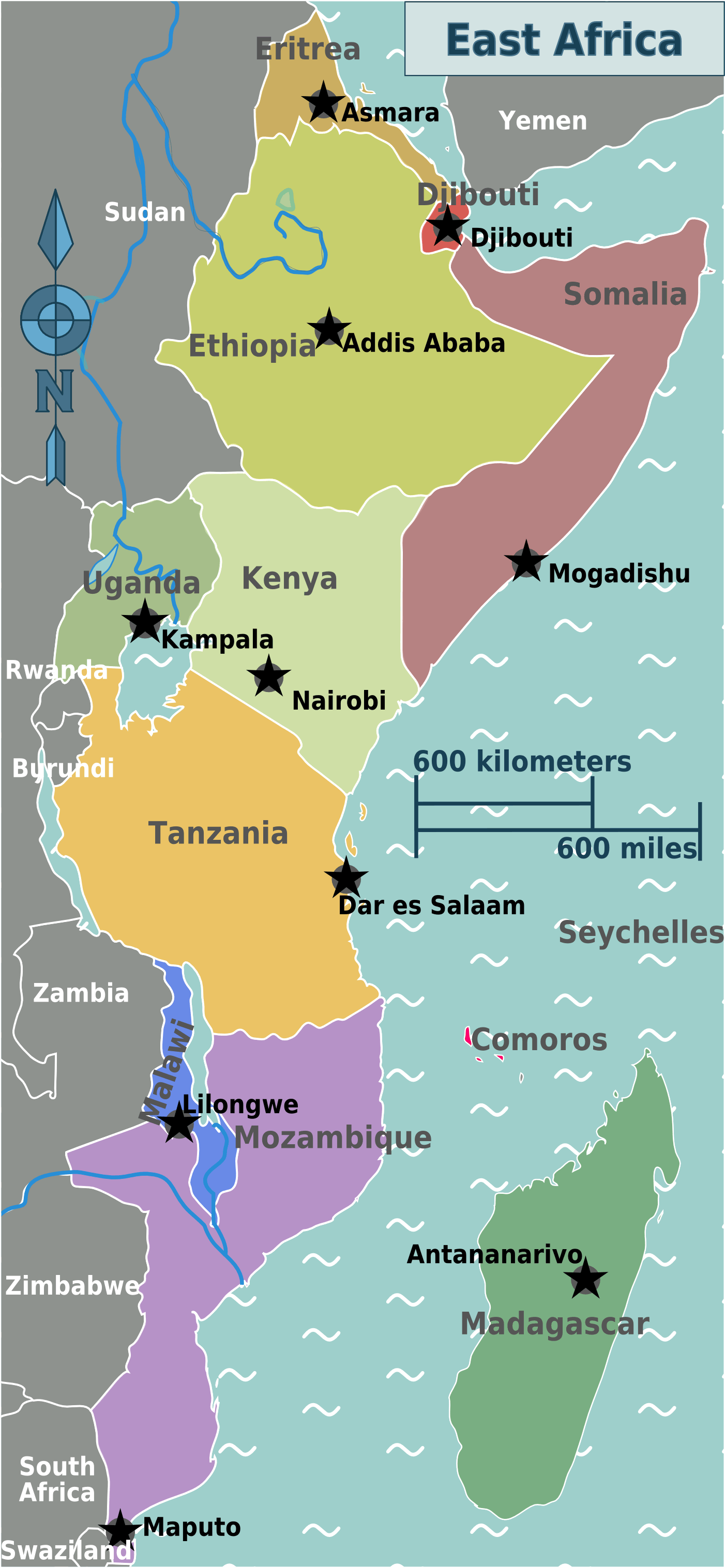
East Africa Natural Gas –Mozambique and Tanzania


The US Geological Survey estimates the area from East Africa’s coastal region and stretching out off-shore to the Seychelles holds 441 trillion cubic feet of natural gas which said to be twice as much as Saudi Arabia’s holdings.

The recent gas discoveries in Mozambique are adding up quickly.  Al Arabiya News quotes Duncan Clarke, CEO of the oil consulting company Global Pacific:

 “Houston-based Anadarko in June announced new finds in northern Mozambique which brought its estimated recoverable resources to up to 60 trillion cubic feet. 

The company has proposed $15 billion in investments to set up LNG facilities. Mozambique’s GDP last year was $12 billion. 


Thailand’s PTT Exploration and Production in May announced a $1.9-billion deal to buy Cove Energy, whose 8.5-percent stake in the Mozambican fields is currently up for sale. 

Two weeks earlier Italy’s ENI, the other large operator in the country’s Rovuma basin, said recent discoveries boosted its recoverable resources up to 52 trillion cubic feet. 
”

Tim Dodson, vice president for exploration at Norway’s Statoil on the company website said that Statoil and Britain’s BG together have discovered around 16 trillion cubic feet in Tanzania.

There are issues for the development of these fields including availability of infrastructure (sea and air ports, roads, housing, etc), lack of skilled work forces, and up-dated petroleum legislation.  There is another concern according to Silas Olang, East African coordinator from resources watchdog Revenue Watch Institute,  “Corruption is a big challenge.”

We are hearing more of plans to build of new facilities to liquefy natural gas and ports to store and ship the LNG around the world.  Will the price of gas get so low due to availability of their own indigenous sources that the markets for this gas from East Africa might take years to develop?  If the Europeans continue to resist fracking, that part of the world might be a market for East African LNG.  Russia is certainly going to make for stiff competition for the European market as they have pipelines delivering gas to Europe right now.

To read more click here.

cbdakota

Shale-Gas Drilling In China


Royal Dutch Shell says the results of early drilling in China for shale-gas looks to be a profitable proposition. In March, Shell signed a production-sharing contract to explore, develop and produce shale gas in China.  According to a Fox Business News Report, Shell will:

“…. apply its technology, operational expertise and global experience to jointly develop shale gas with state-controlled China National Petroleum Corp. over a 3,500-square-kilometer area in the Fushun-Yongchuan block in the Sichuan Basin.”

Shell is not alone in wanting to get into the Chinese shale-gas business as some experts are saying that China has as much potential shale-gas as does the US.  It is reported that Chevron and Total SA (the French multinational oil and gas company) are also seeking relationships with the Chinese.

To read more click here.


Massive Canadian Shale-gas Field Discovered


In a remote corner of northeastern British Columbia, a massive shale-gas field has been discovered by the Apache Corp.   The field is estimated to have 48 trillion cubic feet of recoverable natural gas.  According to Reuters:

The company has drilled three wells into its holdings in the Liard Basin in British Columbia, just south of where the province’s northern border meets the borders of the Yukon and Northwest TerritoriesOnly one of the three wells drilled in the region was treated with the multiple-stage hydraulic fracturing process that has been key to unlocking North America’ prolific shale-gas reserves. That well, which was “fracked” six times, delivered 21.3 million cubic feet of gas per day over its first thirty days of production, which Apache said was the most prolific shale-gas test well ever drilled.

This announcement of the shale-gas find was part of a presentation made by Apache Corp’s John Bedingfield, VP for Worldwide Exploration.    At that presentation he also discussed other activities as follows:

Along with its Liard field, the company said its 580,000 acres of land in the Mississipian Lime field in Kansas and Nebraska could contain as much as 2 billion barrels of oil while its holding in Montana’s Williston Basin may hold another 1 billion barrels.  As well, it’s targeting as much as 1.3 billion barrels of oil in Alaska’s Cook Inlet and 1.4 billion barrels from its holding off the shore of Kenya. It will drill in both regions later this year.  Apache said its holdings in western Oklahoma and the Texas panhandle could also hold another 5.4 billion barrels of oil equivalent while the Permian Basin in west Texas and New Mexico hold 3.4 billion barrels of oil equivalent.

As the supply of natural gas and oil increases, the prices are sure to drop. The price of natural gas in the US has already taken a header as major discoveries have been made in recent years.  Fuel for the production of electricity is tending away from coal to natural gas.   This move is more than just low natural gas prices as it is also being force by new EPA regulations (which may be reversed if Mitt Romney wins the upcoming election.).

Crude oil is more readily transportable from wellhead to the user giving it a wider world market.  But fracking discoveries in other parts of the world may bring supplies that exceed demand and thus lowering of crude oil prices as well.  Then the floor price will probably be set by the cost to produce and make a profit when getting oil by fracking.

cbdakota

BP Tries For Natural Gas In Jordan


BP has begun drilling for natural gas in the Risha field in eastern Jordan near the border with Iraq.  In 2009 BP was given 4 years to explore for natural gas in this field.   After two years of preparation, BP says they expect the to take 3 or 4 months of drilling to prove out.  Jordan is hoping that this effort with BP will lead to the discovery of extensive recoverable gas reserves, which will help cut dependence on oil imports to fuel Jordan’s power sector and industries. According to a posting in Al Arabiya:

The government strategy calls for Risha to produce 330 million cubic feet of gas per day by 2015. The field has a current modest daily output of about 18 million cubic feet. The kingdom, which imports most of its energy, is struggling to meet electricity demand, which is growing by more than 7 percent per year, due to fast growing population and rising industrial needs.

cbdakota