Category Archives: Alternative Energy

Another Solar Energy Company To File For Bankruptcy


Abound Solar, one of four solar energy companies provided loans by the Department of Energy is expected to file for bankruptcy protection the first week in July.  The company received $70 million in federal loans.  The company employs 125.  Solyndra was one of the four receiving loans, and as you probably know, it has gone bankrupt, too.

Slate.com posts “Why No One Should Be Surprised That Another Obama-Backed Solar Startup Is Going Bust.”  The tone of their posting is that Conservatives will be gleeful about this company going bust.  Conservatives do not get off on failures of companies and lost jobs.  In fact the people planning on causing people to loose jobs are those in the current administration doing their best to put all the people employed in the coal industry out of jobs.  If that objective is realized, as directed by President Obama,  it will make 125 jobs lost look insignificant.

Conservatives want R&D monies to be expended on solar cell research.  Not for the government to be picking and choosing businesses for which their record in one of failure.  The Administrations efforts to strong-arm wind and solar has so far yielded little to be proud of.  These operations are only valuable to their cronies that take little to no risk all at the expense of the taxpayer and specifically the ratepayers that have to absorb the vastly overpriced product .  The Energy Information Agency of the US Department of Energy categorizes wind and solar as Non-Dispatchable TechnologiesThat means their delivery is too unreliable for the grids to be useable.   These technologies are not ready for PRIME TIME.   Wind and Solar will remain non-viable until such time that low cost,  large-scale energy storage is developed.

Yes, we know as Slate tells us,  the Chinese have dropped the prices of solar cells to a point where our domestic companies can not compete.  But even the cheaper solar cells don’t make solar farms viable.

cbdakota

Senators Ask If Fisker Loan Is Appropriate


Senator Thune (R-SD) and Grassley (R-IA) have asked Energy Secretary Steven Chu if the $529 million loan granted in 2010 to Fisker is appropriate.   Fisker has received $193 million to date with the remainder being held by the Energy Department while they review the status of certain (undisclosed) benchmarks that Fisker is required to meet.

Thune and Grassley question why monies should be given to Fisker at all when Fisker is partly owned by Qatar.  The Qatar Investment Authority– a branch of the Qatar government–owns about 10% to 15% of Fisker according to Wiki.    Dr. Kamel Maamria, head of the General Investments Portfolio and Executive Director of Qatar Holding LLC, is a member of Fisker’s Board of Directors. The Senators asked in the letter: “Why should the American taxpayer have to accept the credit risk of a company owned by a foreign government?”

According to AutoblogGreen: ”Energy Department spokesman Damien LaVera argues the loan was an appropriate part of the federal government’s effort to help boost fleetwide fuel economy and said Fisker’s delays are “common for start-ups,” according to the report.

Doesn’t sound like Mr. LaVera answered the question.

cbdakota

Washington Post versus Bain Capital


This is posting is not about man-made global warming.   Ok, so why am I posting it,  well because I question the Washington Post’s (WP) understanding of business and also their distorted attempts to paint Mitt Romney, the Republican Candidate for President of the US as a destroyer of US businesses.

I read and report on “alternatively powered” vehicles for this blog, as my regular readers know.  In doing so, I come across a lot of articles about gasoline/diesel powered vehicles.  Not to long ago, General Motors (GM) announced that they were going to build Cadillacs in China.  It seems that up-scale cars are selling pretty well in China.  Sales of the US made Caddies have been encouraging and GM concludes that they will increase their sales if they manufacture the Caddies in China.  Now think about the Toyota and BMW and Nissan vehicles that are being made in the US.  GM wants to do the same thing in China that these companies are doing here in the US.   Sounds like a smart move to me.

The WP published a story on Bain Capital, the business in which Romney had been a partner.  The newspaper’s pitch is that Bain has  “outsourced’ some small US businesses or part of their operation. Because of this, the WP wants to persuade their readers that Romney will be bad for the US business.  This WP article has been taken apart by James Pethokoukis of the American Enterprise Institute.  Pethokoukis shows that much of what the Washington Post reported is inaccurate and in some places just plain wrong. But equally as important is that industries across the globe move some manufacturing out of their homeland at times in order to be competitive.  If the business is not competitive, it goes out of business.

So here is the hypocrisy: General Motors (often called Government Motors) is essentially a branch of the US government as a result of the bail-out several years ago by this administration.   The companies that the Washington Post uses to impugn Bain are so small compared to GM there can be no comparison.  Yet if the WP feels strongly about the issue of outsourcing, why do they not take on GM?  I guess that is easy to figure out.

cbdakota

Offshore Wind Turbines Concrete Bases Failing


An offshore wind farm in the Netherlands was the first to discover that the concrete used to attach the turbines to their steel foundations was eroding.  If unattended the towers could collapse.


In Britain, the same erosion has been confirmed.  Investigations are underway to determine how extensive the problem is. Britain has some 336 offshore wind turbines and it is estimated that it will require some £50million to fix if all the offshore units are involved. 

Off-shore wind turbines are at a major disadvantage as is, without more new and costly expenses being added.  According to the US  Energy Information Administration’s (EIA) the levelized cost of onshore and offshore wind turbines coming on-line in 2017 are $97/mWh and $331/mWh respectively.  By comparison, the EIA’s levelized cost for a natural gas advanced combined cycle unit coming on-line in 2017 is $66/mWh.  And with the price of natural gas dropping in the US, the natural gas unit will be even more favorable price-wise.

cbdakota


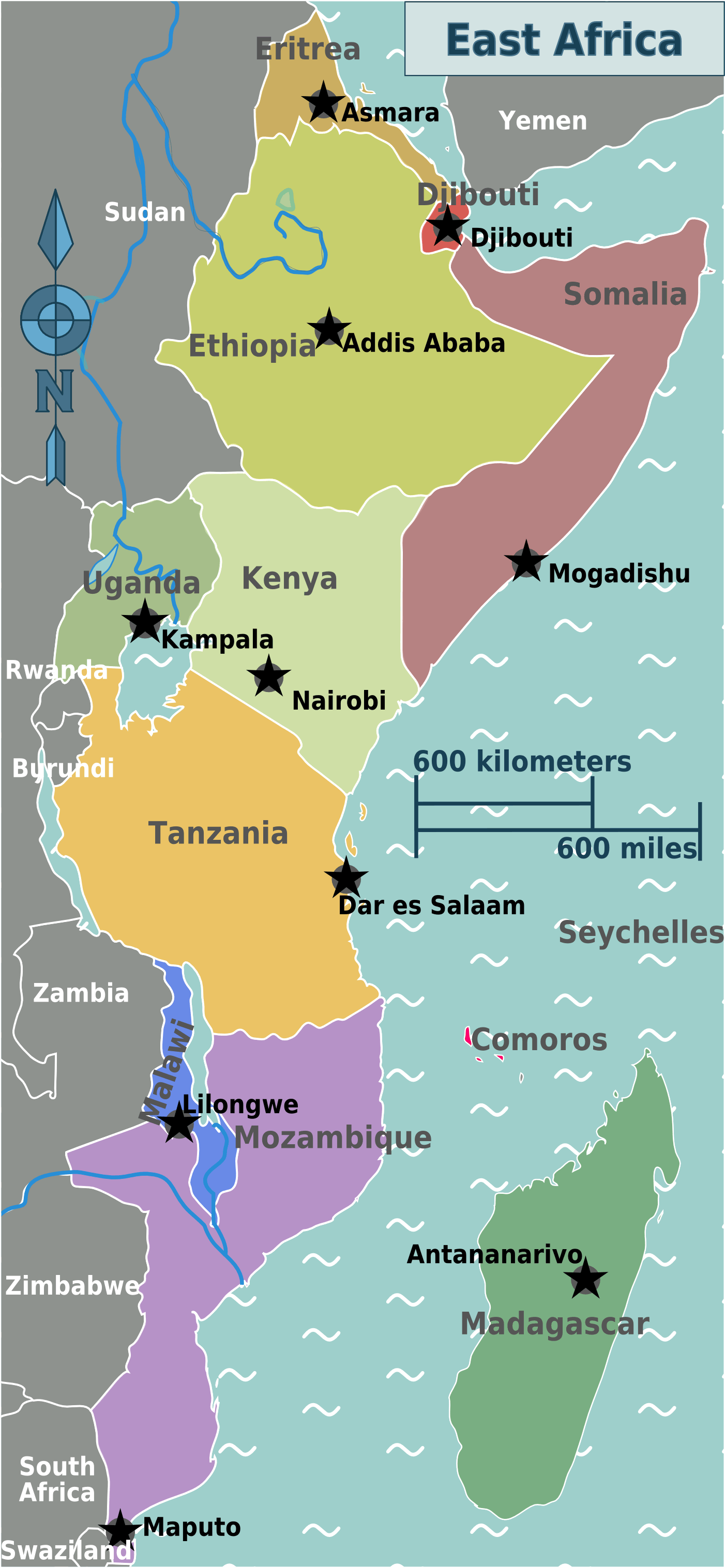
East Africa Natural Gas –Mozambique and Tanzania


The US Geological Survey estimates the area from East Africa’s coastal region and stretching out off-shore to the Seychelles holds 441 trillion cubic feet of natural gas which said to be twice as much as Saudi Arabia’s holdings.

The recent gas discoveries in Mozambique are adding up quickly.  Al Arabiya News quotes Duncan Clarke, CEO of the oil consulting company Global Pacific:

 “Houston-based Anadarko in June announced new finds in northern Mozambique which brought its estimated recoverable resources to up to 60 trillion cubic feet. 

The company has proposed $15 billion in investments to set up LNG facilities. Mozambique’s GDP last year was $12 billion. 


Thailand’s PTT Exploration and Production in May announced a $1.9-billion deal to buy Cove Energy, whose 8.5-percent stake in the Mozambican fields is currently up for sale. 

Two weeks earlier Italy’s ENI, the other large operator in the country’s Rovuma basin, said recent discoveries boosted its recoverable resources up to 52 trillion cubic feet. 
”

Tim Dodson, vice president for exploration at Norway’s Statoil on the company website said that Statoil and Britain’s BG together have discovered around 16 trillion cubic feet in Tanzania.

There are issues for the development of these fields including availability of infrastructure (sea and air ports, roads, housing, etc), lack of skilled work forces, and up-dated petroleum legislation.  There is another concern according to Silas Olang, East African coordinator from resources watchdog Revenue Watch Institute,  “Corruption is a big challenge.”

We are hearing more of plans to build of new facilities to liquefy natural gas and ports to store and ship the LNG around the world.  Will the price of gas get so low due to availability of their own indigenous sources that the markets for this gas from East Africa might take years to develop?  If the Europeans continue to resist fracking, that part of the world might be a market for East African LNG.  Russia is certainly going to make for stiff competition for the European market as they have pipelines delivering gas to Europe right now.

To read more click here.

cbdakota

Shale-Gas Drilling In China


Royal Dutch Shell says the results of early drilling in China for shale-gas looks to be a profitable proposition. In March, Shell signed a production-sharing contract to explore, develop and produce shale gas in China.  According to a Fox Business News Report, Shell will:

“…. apply its technology, operational expertise and global experience to jointly develop shale gas with state-controlled China National Petroleum Corp. over a 3,500-square-kilometer area in the Fushun-Yongchuan block in the Sichuan Basin.”

Shell is not alone in wanting to get into the Chinese shale-gas business as some experts are saying that China has as much potential shale-gas as does the US.  It is reported that Chevron and Total SA (the French multinational oil and gas company) are also seeking relationships with the Chinese.

To read more click here.


Massive Canadian Shale-gas Field Discovered


In a remote corner of northeastern British Columbia, a massive shale-gas field has been discovered by the Apache Corp.   The field is estimated to have 48 trillion cubic feet of recoverable natural gas.  According to Reuters:

The company has drilled three wells into its holdings in the Liard Basin in British Columbia, just south of where the province’s northern border meets the borders of the Yukon and Northwest TerritoriesOnly one of the three wells drilled in the region was treated with the multiple-stage hydraulic fracturing process that has been key to unlocking North America’ prolific shale-gas reserves. That well, which was “fracked” six times, delivered 21.3 million cubic feet of gas per day over its first thirty days of production, which Apache said was the most prolific shale-gas test well ever drilled.

This announcement of the shale-gas find was part of a presentation made by Apache Corp’s John Bedingfield, VP for Worldwide Exploration.    At that presentation he also discussed other activities as follows:

Along with its Liard field, the company said its 580,000 acres of land in the Mississipian Lime field in Kansas and Nebraska could contain as much as 2 billion barrels of oil while its holding in Montana’s Williston Basin may hold another 1 billion barrels.  As well, it’s targeting as much as 1.3 billion barrels of oil in Alaska’s Cook Inlet and 1.4 billion barrels from its holding off the shore of Kenya. It will drill in both regions later this year.  Apache said its holdings in western Oklahoma and the Texas panhandle could also hold another 5.4 billion barrels of oil equivalent while the Permian Basin in west Texas and New Mexico hold 3.4 billion barrels of oil equivalent.

As the supply of natural gas and oil increases, the prices are sure to drop. The price of natural gas in the US has already taken a header as major discoveries have been made in recent years.  Fuel for the production of electricity is tending away from coal to natural gas.   This move is more than just low natural gas prices as it is also being force by new EPA regulations (which may be reversed if Mitt Romney wins the upcoming election.).

Crude oil is more readily transportable from wellhead to the user giving it a wider world market.  But fracking discoveries in other parts of the world may bring supplies that exceed demand and thus lowering of crude oil prices as well.  Then the floor price will probably be set by the cost to produce and make a profit when getting oil by fracking.

cbdakota

The Ill-informed Bishop And The Wind Turbines


Continue reading

EPA Gives Honda Fit EV A 118 MPG (eq) Rating


The EPA gave the Honda Fit EV a 118 mpg equivalency rating. This is their best rating yet for a passenger car.  My daughter owns a Fit, IC engine, and gets great mileage and has experienced very low maintenance and up keep costs.  It’s a very good vehicle. But most all of the EPA rating mileage equivalent for EVs and hybrids have come down as the owners face the real world of driving.  The EPA is rating the Leaf at 73 mpg equivalent.  Read my posting of a Tennessee Leaf owner’s trip  here.

The new EPA rating for the Chevy Volt is 38 mpg versus the former 35 mpg.  This change stemmed from an upgraded Li-ion battery that can hold a 16.5 kWH charge versus the former 16 kWH.   Added a half hour to the battery charge time however. To read more click here.

cbdakota

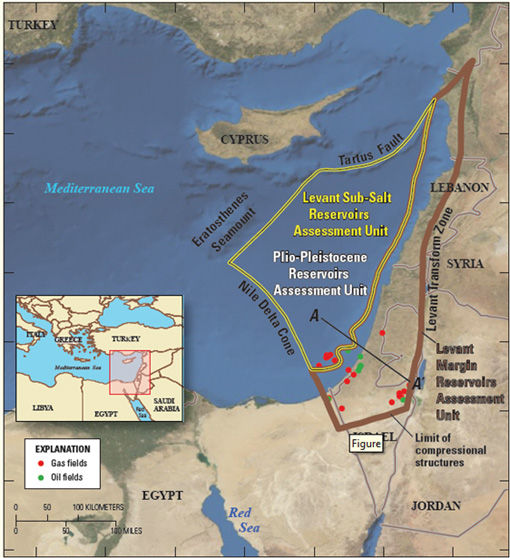
Eastern Med Oil and Gas Discoveries—Israel and Cyprus


Natural gas and oil producers normally are not the way that Israel and Cyprus are characterized, but recent discoveries in the Eastern Mediterranean are changing that perception.

The Levantine Basin in Eastern Mediterranean (Source: USGS)

Israel  Two years ago, in June 2010, the Leviathan, the largest gas field in the Eastern Mediterranean was discovered by Houston’s Noble Energy.  The natural gas reserves in that find that are in Israeli territorial waters are estimated to be something in the range of 25 trillion cubic feet (Tcf).   Some experts are estimating that there might also be up to 600 million barrels of oil.  And that is not all.  The Israeli Tamar field is believed to contain more that 8 Tcf of natural gas. The Energy Tribune’s posting by Michael Economides notes that:

A statement released on Sunday by the Israel Opportunity energy exploration partnership said that prospecting at the Pelagic group of deep-sea fields, west of Haifa, showed a potential of 6.7 Tcf of gas and 1.4 billion barrels of oil.  

These finds are very timely, because Egypt has ended its contract to supply gas to Israel

 Cyprus  In December 2011 Noble Energy announced that their first well in the Cypriot Economic Zone of the Leviathan Field contains up to 9 Tcf of natural gas.   Energy Tribune reports:

The size of the ultimate recoverable gas in the Eastern Mediterranean, according to the United States Geological Survey, is of the order of 200 Tcf of natural gas and 3.7 billion barrels of oil. A dozen new Cypriot blocks, currently in the process of being offered to international bidders, will almost certainly add 50 Tcf, perhaps 75 Tcf to the already discovered.

On-shore delivery from the Levantine basin will not be easy.  The gas is located about 20,000 feet below sea level —6,000 feet to sea bottom and then an additional 14,000 feet of required drilling.) Further it is believed that the gas will need to be liquefied and delivered on shore by tanker because it will be too deep to put in piping. The size and cost of these facilities are the sort of things that can be managed by large oil firms but to date, these companies seem reluctant to work with the Israelis for fear of antagonizing their Arab partners.

The solution as outlined by Economides is:

Israel will need Cyprus to exploit its resources by employing the right size company to construct e.g., LNG or gas-to-liquids (GTL) plants. The size of the resources cannot allow them to even remotely be consumed domestically; export is the only option. The Cypriot and Israel reservoirs should be unified; they are geologically contiguous anyway. Cyprus, in turn, will need the shield provided by Israel in relation to saber rattling Turkey. The Israeli-Cypriot marriage is made in oil and gas heaven.

cbdakota