Monthly Archives: December 2023

Will EV Insurance Go Up Because of Fires?—It’s the Battery Stupid, Part4


We are told that EVs do not experience as many fires as do Internal Combustion Engines (ICE) vehicles and that may be true.  But there is no question about EV fires being much more hazardous.  Besides being more hazardous, these fires can be unexpected. For example, EV battery fires in garages have occurred without the owner having any idea it was going to happen.

It is well known that EV batteries that have been exposed to salt water are very likely to ignite.  EVs involved in a collision are dangerous too if the battery housing is damaged.  

Salt water is conductive where common water is not.  The salt water can cause a short in a lithium-ion cell thus resulting in an electricity discharge that heats up the cell.  A thermal runaway reaction can then occur heating up other cells and cause them to burn.  It is possible for this to cause the entire set of batteries cells to begin their own thermal runaway reaction.  

CRS AUTOMOTIVE blog “HOW PRONE ARE ELECTRIC CARS TO CATCHING FIRE” adds this:

“How else is a lithium-ion battery fire different from a gasoline fire? The biggest difference is the time it takes to ignite. Gasoline fires start almost immediately when gasoline comes in contact with a spark or flame and spreads rapidly. Battery fires typically take some time to achieve the heat necessary to start the fire.

In some instances, that delay is very good news. It can let the occupants of a car involved in a crash get out of the vehicle before the fire starts. But it can pose its own problems. Sometimes a battery can be damaged, perhaps by the car running over some debris, and the driver might not be aware of the damage. And then a fire can start well after the initial incident. That could theoretically cause a fire after the car is parked in a garage. With an electric car fire, you need water. That might sound obvious, but in many cases, modern fire departments use foam or dry chemicals that are better than old-fashioned H20 at suppressing fires. While dry chemicals are great at putting down ordinary electrical fires, they may be ineffective with a fire stemming from a car’s Lithium-ion battery

Water is the best approach to a Lithium-ion fire. But that doesn’t mean you should imitate a sprinkler and attempt to dose the whole fire by moving back and forth. Rather, you want to keep a direct and focused stream on the battery until it relents – and you’d need anywhere between two to 30 tonnes (8000 gallons) of water to put out this kind of fire. Also, don’t touch the high voltage components or open up the battery. They’re the most likely part of the battery to absorb heat.”

Special training for firemen is required to deal with a potential electrical charge on the autos frame.

The visual evidence appears to show that an EV fire generally destroys the entire car. Some of the ICE fires do too, but destruction of the entire car is not a given.  Most of the ICE fires occur in older cars that have not had a good maintenance history.  If you had a 2015 Toyota engine fire and had to replace the entire motor, it would cost between $4,000 and $5,500. This includes the cost of parts and labor according to the CAR COSTING blog. Not cheap but certainly less than what a totaled EV would cost.

Some insurers in the UK have already begun to raise the rates of EVs.

cbdakota
Battery Life and Replacement–It’s the EV battery Stupid, Part 4


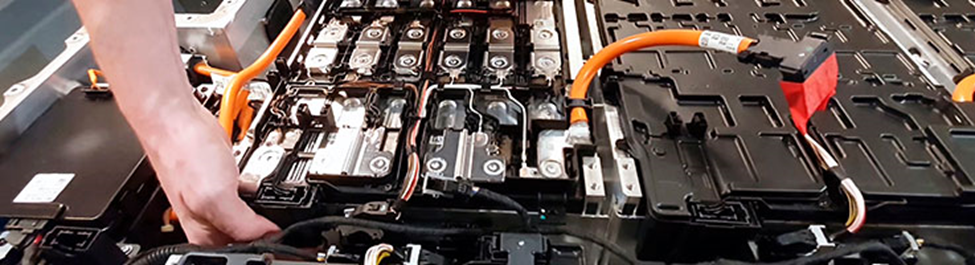
I think that the industry has not had enough experience to accurately predict life of an EV battery.

Consumer Affairs speaks to this issue in their July, 2023 blog titled “EV battery replacement cost”.  Their findings are summarized:

“We reached out to five mechanics and technicians from different parts of the U.S. to see how much an EV battery replacement costs for different vehicles, and the average results ranged from $4,489 all the way to a staggering $17,658.

  • All EV batteries will eventually fail to hold a charge and require replacement.
  • It’s hard to pinpoint how long EV batteries will last, but most have a life span between eight and 15 years.
  • Sourcing a replacement EV battery from anyone but your car’s manufacturer is nearly impossible, which is the main reason replacement costs are so high.
  • EV battery repair is a growing industry that may help you avoid the high cost of a replacement, but it’s not commonly available yet.
  • The Federal Government requires the car maker to guarantee 100,000 miles or 8 years whichever comes first. Some warranties only cover the EV battery if it no longer holds a charge at all, while others will cover the replacement of any EV battery that has dropped below 60% or 70% of its maximum capacity.

I do not think that a used EV buyer would have any guarantee on battery that had already met one of those stipulations.

The following chart was assembled by Consumer Affairs after interviewing mechanics around the country.  It may look strange to be dealing with 2014 EVs but that reflects the car’s age using the battery. The Prius is a hybrid with a small ICE engine and a battery combination.

          VehicleAverage parts costAverage labor costAverage total cost
          2014 Tesla Model S$13,500$1,500$15,000
          2014 Nissan Leaf$17,269$388$17,657
          2014 Toyota Prius$3,858$631$4,489

Next Car’s June 2022 posting, “EV Batteries 101: Degradation, lifespan, warranties and more” echos Consumer Affairs posting.  NEXT Car adds:  

“Buying a used Tesla with close to or more than 100,000 miles on the odometer, or holding onto the one you already own out of warranty, is a much riskier decision given the high cost of repairs”. 

cbdakota

EV Battery Charging–Its The Battery, Stupid. Part 3


The Alliance for Automotive Innovation says there are approximately 100,000 public charging ports in the US. The Federal Government is attempting to provide more.  The Fed’s target is 500,000 charging ports. If there were more charging stations, there would be less range anxiety.

The rough number of gasoline/diesel filling stations is 145,000.  Well, if it feels like there is a filling station almost anywhere, why would there need to have 500,000 charging ports?  The answer is because it takes so long to recharge the battery.

The Biden Administration’s plan to put up 500,000 charging ports will probably take a while to accomplish.  Currently, the plan is for each State to install a charging station along their major highways, 50 miles apart. Further, a charging station must be within a mile of an on and off Interstate intersection.

A private party that wants to operate a charging station picks a site for the station.  The site is approved. The Feds will pay up to 80% of the cost and the private party must pay 20% or more.  These stations can cost up to $1million.  Each station must have a minimum of 4 charging ports.

The API says that the average fill-uptakes 2 minutes for an ICE vehicle. Then that vehicle could go 300 to 400 miles of highway driving. 

Examining the EV owner’s options for recharging the battery so as it has range of 350 miles.  (Hour charge to miles range from US Department of Transportation-Charger types and speed.)

Level 1 Minimum cost using house AC outlet.  One hour provides 2.5 miles of range.  So about 6 days to get charged to 350 miles range.

Level 2 Purchasing a charger/installation required. 240-volt system, a home installation.  One hour provides 10 to 20 miles of range.   Using the 20 miles per hour charge would need 17 hours to get 350 miles range.

Level 3 Fast DC.  The public stations are mostly at this level.   One hour charge provides about 180-to-240-mile range. Using 240 mile per hour charge would take about an hour and a half to get 350 miles range.

Tesla Supercharger. Dedicated Tesla charging points.  One hour would give 1000 miles range. The 350-mile range would be done in about 20 minutes.

 Some thoughts:

  • Anyone that buys an EV and uses a level1 must have more money than that sense. For certain, that person has an ICE car in the garage.  The EV is for show.
  • If you buy an EV and you live in an apartment, where you only have street parking, you would have to go to public charging stations.
  • Level 2 requires a professional  installation with costs that can be steep, often a thousand dollars or more.  The charger itself isn’t free.     
  •  Level 3.  If you use FastDC you will spend more money for charges than if you use a level 2 installed system using your cheaper home electricity.
  •  Very important: routine charging with Superchargers and Fast DC degrades the batteries to the point they won’t be able to hold their charge as long.  The fast chargers heat up the battery and that can cause loss of battery range. Tesla says that you should use these fast chargers sparingly.
  • Every charge degrades the battery’s capacity a little.  From Wikipedia:

Capacity loss or capacity fading is a phenomenon observed in rechargeable battery usage where the amount of charge a battery can deliver at the rated voltage decreases with use.[1][2]

In 2003 it was reported the typical range of capacity loss in lithium-ion batteries after 500 charging and discharging cycles varied from 12.4% to 24.1%, giving an average capacity loss per cycle range of 0.025–0.048% per cycle.[3]

  • Public charging stations are often not close to an available place that you can retire to, while you wait for your battery to get charged.  Think of sitting in your car in inclement weather, either hot or cold.
  • Public charging stations are not always reliable. The following is from

. Findings from a 2022 University of California, Berkely study showed that one-quarter of public chargers in the San Francisco Bay Area didn’t work due to “unresponsive or unavailable screens, payment system  failures, charge initiation failures, network failures, or broken connectors”. 

The cause may be lack of income the company gets from charging EVs. The US numbers of EVs on the road are not as many as was predicted.

Charging time is very long.  Charging stations are inadequate for even the small number of EVs on the road.  The fast chargers are desirable, but their use shortens the life of the battery.

cbdakota

Range is the Rage: Its The EV Battery, Stupid


Range is the Rage

Car and Driver say that range is the all-important stat.  Car and Driver posting goes on to say:

 “Whether or not you make it to the next public charging spot, are able to complete your daily commute, or are instead stranded on the side of the road depends on it.

Range is so heavily scrutinized because EVs can travel on average barely half the distance of gas-powered vehicles before they require a “fill-up,” and because gas pumps are far more ubiquitous than fast chargers”.

The amount of charge of the EV’s battery is akin to the amount of gasoline (or diesel) in the ICE’s (internal compbution engine)tank.  The battery charge will determine how many miles your EV can go before it is exhausted. That is equivalent to an ICE running empty of gasoline. Many postings by EV owners are about trying to find an EV battery charging station before the battery is “empty”. see here and here and here .Pretty agonizing and unlike the feeling you have, that there is a gasoline station almost anywhere.  You can get more charge and thus miles of range by getting a bigger, heavier battery, but that drives the cost of the vehicle up.  You don’t have to buy a bigger motor to get more range, if you purchase a smaller, lighter ICE vehicle at a lesser cost. 

The EPA rates highway vehicle range and puts the range number on the vehicle’s window sticker in the show rooms.   They do this for Electric vehicles (EV) and internal combustion (ICE –gasoline and diesel) vehicles. The range provided by the EPA for EVs is almost always an overstatement according to Car and Driver. Car and Driver EV range tests are conducted at a steady 75 miles per hour (MPH). They do this “because highway driving is where range most matters”.  By contrast, ICE vehicles almost always beat the EPA ratings in the 75 MPH tests. This is because the ICE vehicles have transmission gears whereas only a few EV models have transmission gearing.  The EV motors must increase revolutions where the motors are less efficient.

There are other factors that affect range. One of which is temperature.  In cold weather, ICE vehicles heat the cabin using the waste heat that comes from combustion of the gasoline. In the summer, ICE engine heat is dissipated by the radiator. The EVs use a resistive heater that consumes a lot of battery power. 

The South Dakota Electric Vehicle Infrastructure Deployment Plan (SDEVIDP) referenced several tests relative to use of heaters in the cold weather and air conditioning in the hot weather.

 According to field testing performed by the Norwegian Auto Federation, operation on a standardized test course in temperatures ranging 21° F to 37° F reduced EV range by approximately 20% and they also lengthened charging times in cold temperatures. A similar result was observed in dynamometer testing by the American Automobile Association that indicated that without internal vehicle heating, EV battery range dropped by 12% at 20° F, but with the heater in operation, it dropped roughly 41%. Consistent with other studies, at 95° F, EV battery range dropped by 4% without air conditioning and by 17% with air conditioning in operation.

The Idaho National Laboratory conducted a study of EV charging under a broad range of temperature conditions over a nearly two-year period, using data collected from a taxi fleet operating in New York City. The study determined that the time to reach 80% state of charge (SOC) doubled or tripled at temperatures below 32° F.

There is another factor that limits range.  The manufacturers of the EV batteries recommend that you always keep the charge between 20% to 80%.  Not 0% to 100%.  So good management of the battery’s life limits the range to just 60%. More on this during the discussion of battery charging.

Summary

The EV range is usually overstated by the EPA.  To increase range, you would need a bigger battery and that is costly. Temperature, cold or warm, reduce the battery charge.  On a cold day, for example, by as much as 40%  if you use the cabin heater on a cold day.  To extend the battery’s life, it should not drop below 20% or exceed 80%.  You will have to recharge it more often to prevent it from going below 20%,

cbdakota