
Range is the Rage
Car and Driver say that range is the all-important stat. Car and Driver posting goes on to say:
“Whether or not you make it to the next public charging spot, are able to complete your daily commute, or are instead stranded on the side of the road depends on it.
Range is so heavily scrutinized because EVs can travel on average barely half the distance of gas-powered vehicles before they require a “fill-up,” and because gas pumps are far more ubiquitous than fast chargers”.
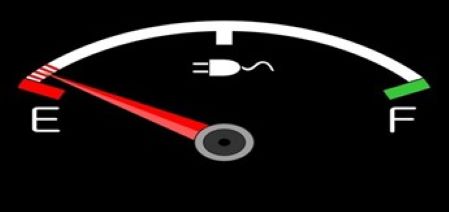
The amount of charge of the EV’s battery is akin to the amount of gasoline (or diesel) in the ICE’s (internal compbution engine)tank. The battery charge will determine how many miles your EV can go before it is exhausted. That is equivalent to an ICE running empty of gasoline. Many postings by EV owners are about trying to find an EV battery charging station before the battery is “empty”. see here and here and here .Pretty agonizing and unlike the feeling you have, that there is a gasoline station almost anywhere. You can get more charge and thus miles of range by getting a bigger, heavier battery, but that drives the cost of the vehicle up. You don’t have to buy a bigger motor to get more range, if you purchase a smaller, lighter ICE vehicle at a lesser cost.
The EPA rates highway vehicle range and puts the range number on the vehicle’s window sticker in the show rooms. They do this for Electric vehicles (EV) and internal combustion (ICE –gasoline and diesel) vehicles. The range provided by the EPA for EVs is almost always an overstatement according to Car and Driver. Car and Driver EV range tests are conducted at a steady 75 miles per hour (MPH). They do this “because highway driving is where range most matters”. By contrast, ICE vehicles almost always beat the EPA ratings in the 75 MPH tests. This is because the ICE vehicles have transmission gears whereas only a few EV models have transmission gearing. The EV motors must increase revolutions where the motors are less efficient.
There are other factors that affect range. One of which is temperature. In cold weather, ICE vehicles heat the cabin using the waste heat that comes from combustion of the gasoline. In the summer, ICE engine heat is dissipated by the radiator. The EVs use a resistive heater that consumes a lot of battery power.
The South Dakota Electric Vehicle Infrastructure Deployment Plan (SDEVIDP) referenced several tests relative to use of heaters in the cold weather and air conditioning in the hot weather.
According to field testing performed by the Norwegian Auto Federation, operation on a standardized test course in temperatures ranging 21° F to 37° F reduced EV range by approximately 20% and they also lengthened charging times in cold temperatures. A similar result was observed in dynamometer testing by the American Automobile Association that indicated that without internal vehicle heating, EV battery range dropped by 12% at 20° F, but with the heater in operation, it dropped roughly 41%. Consistent with other studies, at 95° F, EV battery range dropped by 4% without air conditioning and by 17% with air conditioning in operation.
The Idaho National Laboratory conducted a study of EV charging under a broad range of temperature conditions over a nearly two-year period, using data collected from a taxi fleet operating in New York City. The study determined that the time to reach 80% state of charge (SOC) doubled or tripled at temperatures below 32° F.
There is another factor that limits range. The manufacturers of the EV batteries recommend that you always keep the charge between 20% to 80%. Not 0% to 100%. So good management of the battery’s life limits the range to just 60%. More on this during the discussion of battery charging.
Summary
The EV range is usually overstated by the EPA. To increase range, you would need a bigger battery and that is costly. Temperature, cold or warm, reduce the battery charge. On a cold day, for example, by as much as 40% if you use the cabin heater on a cold day. To extend the battery’s life, it should not drop below 20% or exceed 80%. You will have to recharge it more often to prevent it from going below 20%,
cbdakota
 Climate Change Sanity